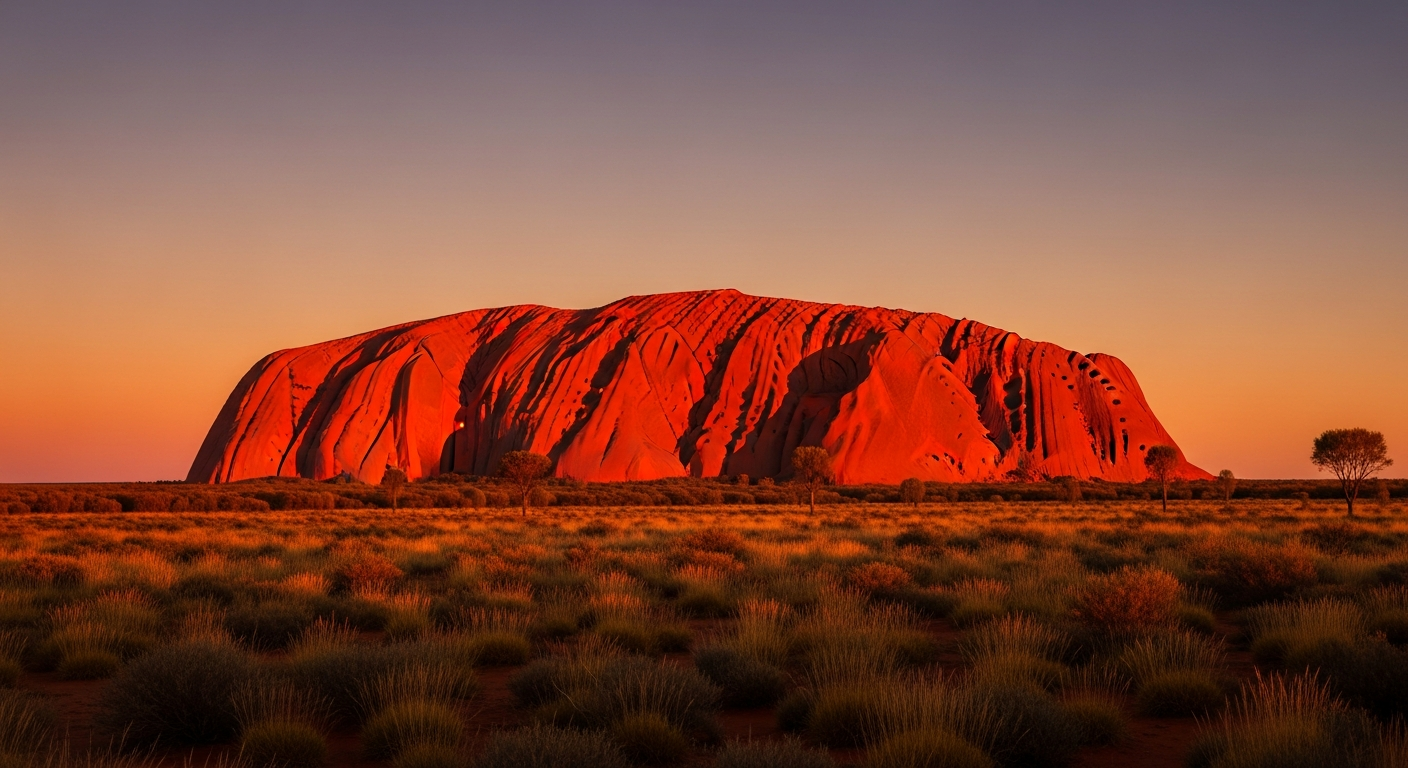
Uluru is the spiritual heart of Australia - a colossal sandstone monolith rising 348 metres from the flat red desert of the Northern Territory. Sacred to the Anangu people for tens of thousands of years, Uluru (formerly known as Ayers Rock) is one of the world's most recognisable natural landmarks. Together with the 36 domed rock formations of Kata Tjuta (the Olgas) 25km to the west, it forms the centrepiece of Uluru-Kata Tjuta National Park, a UNESCO World Heritage site for both its natural and cultural significance. The colours of Uluru shift constantly - from ochre to deep crimson to violet - with the changing light, and watching sunrise or sunset here is a profoundly moving experience that stays with you forever.
Getting There
Uluru is located in the Red Centre of Australia, approximately 460km south-west of Alice Springs. Connellan Airport (Ayers Rock Airport) receives direct flights from Sydney, Melbourne, Brisbane, and Cairns (Jetstar, Qantas). The drive from Alice Springs to Yulara (the resort town servicing Uluru) takes about 5 hours on sealed roads via the Stuart and Lasseter Highways. Greyhound and AAT Kings operate bus transfers from Alice Springs. Within the national park, distances between sites can be significant - a car is highly recommended. Shuttles run between Yulara resort and the park.
Uluru Base Walk
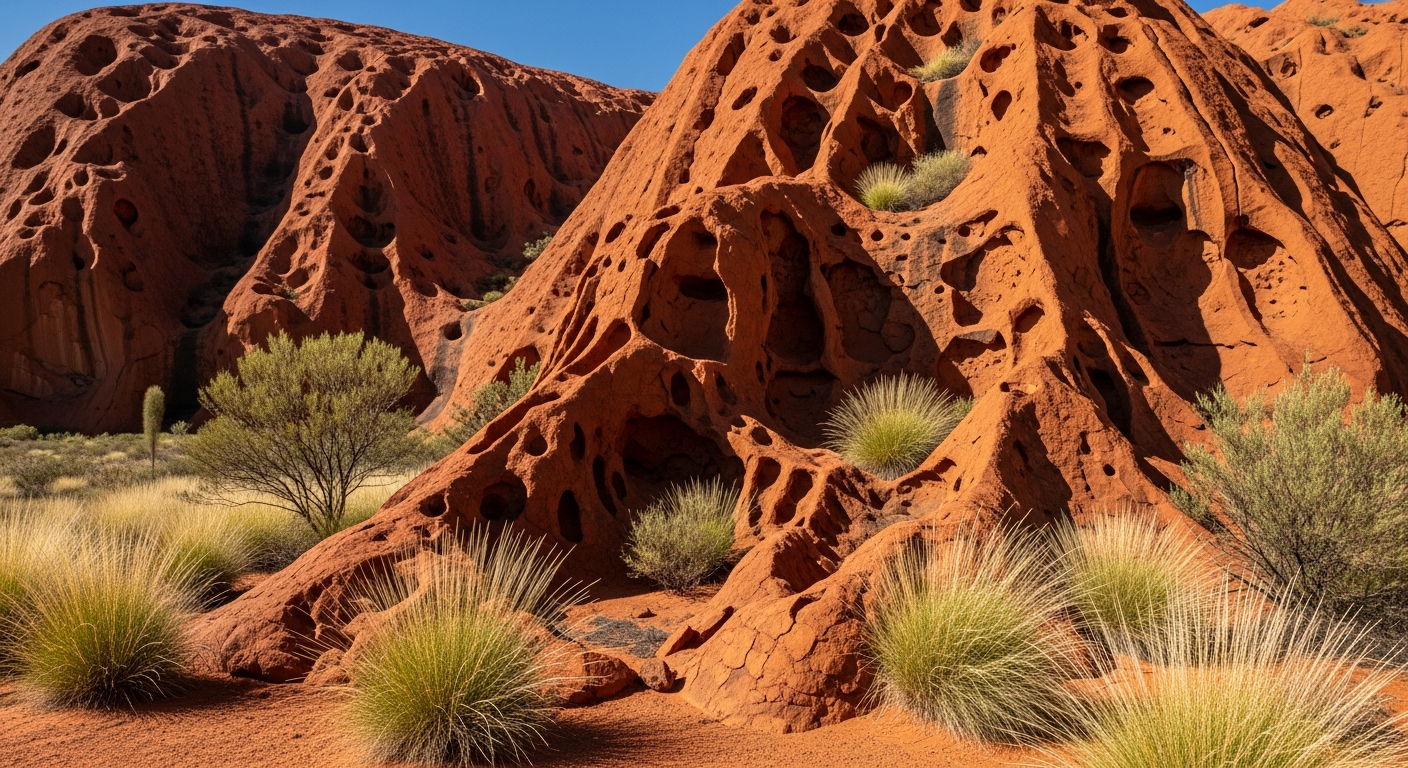
The Uluru base walk is the best way to truly appreciate the scale, textures, and sacred significance of this extraordinary monolith:
- The walk: A 10.6km loop trail that circumnavigates the entire base of Uluru. The flat, well-maintained path takes 3-4 hours and reveals an astonishing variety of features - waterholes, caves, rock art, and the deeply folded and ridged surface of the rock up close.
- Sacred sites: Parts of the base walk pass areas of deep spiritual significance to the Anangu people. Photography is prohibited at several sacred sites, clearly marked along the trail. Please respect these requests.
- Mutitjulu Waterhole: A permanent waterhole at the base of Uluru, sacred to the Anangu. An easy 1km return walk from the Kuniya car park. Look for ancient rock art at the waterhole.
- Mala Walk: A ranger-guided walk (free, daily at 8am from October to April, 10am May to September) along the northern base of Uluru, explaining Anangu Tjukurpa (creation stories) and the significance of the rock art and landscape features.
- Climbing: Climbing Uluru was permanently closed in October 2019 out of respect for Anangu wishes. The base walk and surrounding walks offer far more meaningful experiences.
Kata Tjuta (The Olgas)
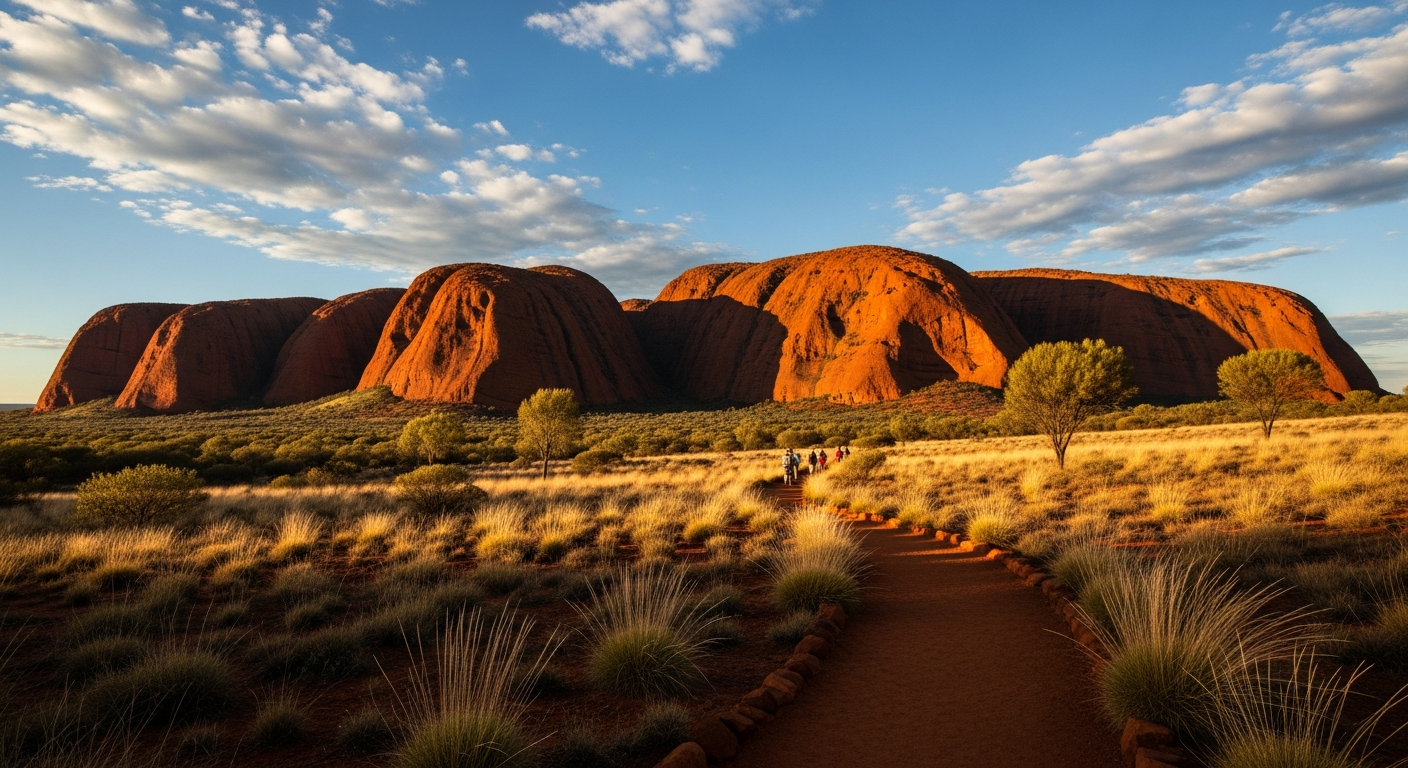
Kata Tjuta - meaning "many heads" in Pitjantjatjara - is a group of 36 steep-sided domed rock formations located 25km west of Uluru:
- Valley of the Winds: The premier walk at Kata Tjuta - a 7.4km loop through the valleys between the domes. The trail winds through narrow gorges, past towering rock walls, and through spinifex-covered desert. Allow 3-4 hours. The scenery is breathtaking - many visitors consider it even more spectacular than Uluru itself.
- Walpa Gorge: A shorter, easier walk (2.6km return, 1 hour) into a gorge between two of the tallest domes. The gorge is sheltered and cool, with interesting desert plants and birdlife.
- Scale: The tallest dome of Kata Tjuta (Mount Olga) stands 546 metres above the plain - nearly 200 metres taller than Uluru. The formations cover an area of 21.7 square kilometres.
- Best time: Start the Valley of the Winds walk early (by 7am in summer, 8am in winter). The trail closes when temperatures exceed 36C.
Field of Light & Sunset
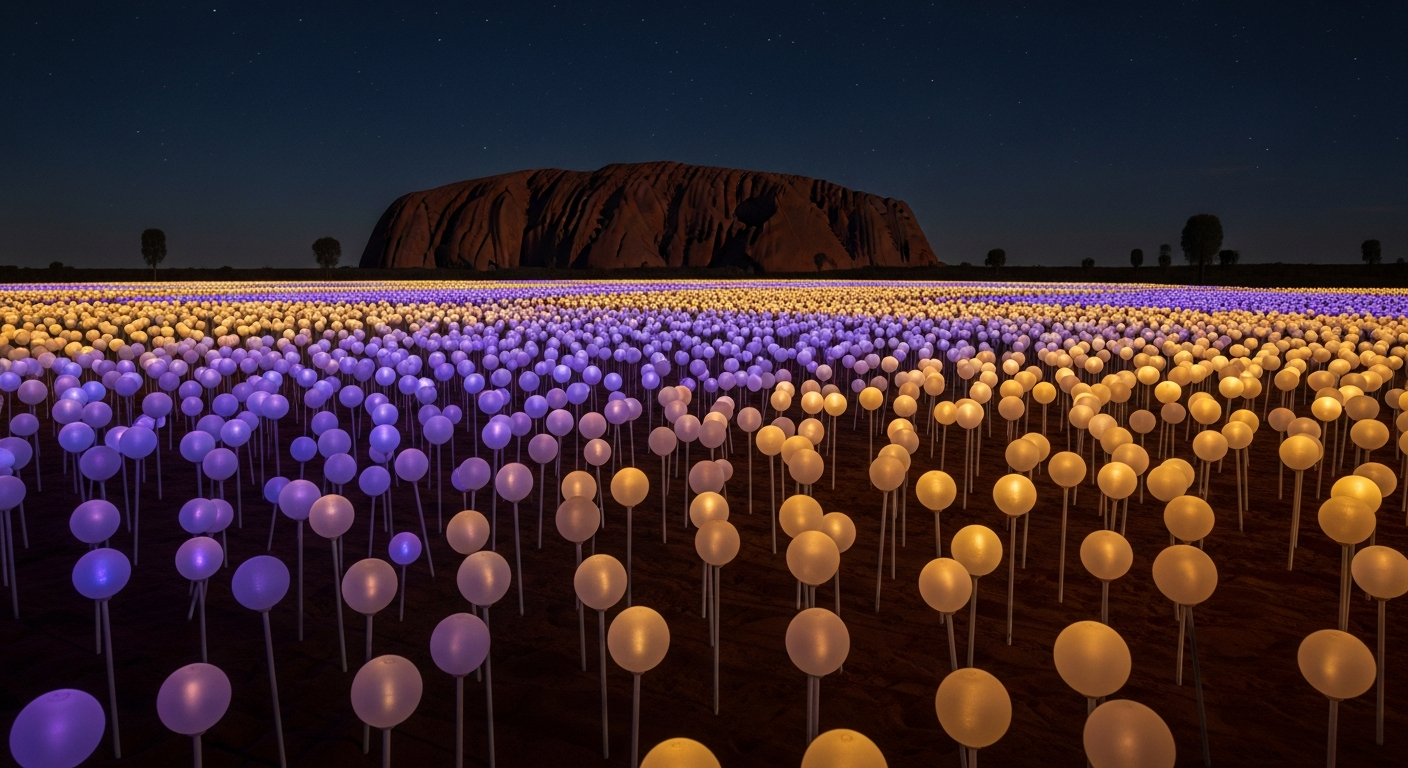
Sunrise and sunset at Uluru are unforgettable, and the Field of Light installation adds a magical dimension:
- Sunset viewing: Designated sunset viewing areas provide unobstructed views of Uluru as it transforms through an extraordinary palette of colours - gold, orange, crimson, deep red, and finally purple as darkness falls. Complimentary sparkling wine is served at the Ayers Rock Resort sunset viewing area.
- Sunrise viewing: Equally spectacular, with the first light painting Kata Tjuta and then Uluru in soft pink and gold. Less crowded than sunset.
- Field of Light: Artist Bruce Munro's stunning installation of 50,000 slender stems crowned with frosted-glass spheres that bloom with gentle colour as darkness falls. The installation covers an area the size of seven football fields in the desert near Uluru. Various experiences are available - from a self-guided walk to a guided dinner under the stars (from $45 to $350+).
- Sounds of Silence dinner: An iconic outback dining experience - a gourmet meal served under the stars with didgeridoo performance, bush tucker, and a star-gazing guide (from $250).
Anangu Culture
Uluru-Kata Tjuta is jointly managed by the traditional Anangu owners and Parks Australia. Learning about Anangu culture is a deeply enriching part of any visit:
- Uluru-Kata Tjuta Cultural Centre: Free entry. Excellent displays about Anangu Tjukurpa (law, religion, and culture), bush foods, and the history of the park. Local artists sell authentic dot paintings and carvings.
- Aboriginal-guided tours: Several operators offer tours led by Anangu guides, including dot painting workshops, bush food walks, and cultural storytelling.
- Maruku Arts: A community-owned art centre at the Cultural Centre selling authentic Anangu artwork.
Where to Eat
- Ilkari Restaurant: (Sails in the Desert Hotel): Fine dining with native Australian ingredients. Mains $38-55.
- Walpa Lobby Bar: (Sails in the Desert): Cocktails and light meals with views of the pool and gardens. Mains $22-35.
- Arnguli Grill: (Desert Gardens Hotel): Steaks, barramundi, and Australian cuisine. Mains $30-48.
- Pioneer BBQ & Bar: (Outback Pioneer Hotel): DIY BBQ - cook your own kangaroo, crocodile, emu, or steak over open coals. Platters $20-35. The most fun and social dining option.
- Gecko's Cafe: (Resort Town Square): Casual pizza, pasta, and burgers. Mains $18-28.
Where to Stay
All accommodation is in the Ayers Rock Resort complex at Yulara, 20km from Uluru:
- Budget: Outback Pioneer Hotel (from $120), Ayers Rock Campground (powered sites from $42, cabins from $140).
- Mid-Range: Desert Gardens Hotel (from $250), Emu Walk Apartments (from $280).
- Luxury: Sails in the Desert (from $380), Longitude 131 (ultra-luxury tented camp, from $2,500 per person per night all-inclusive).
Practical Tips
- Best time to visit: April to September offers the most comfortable temperatures (5-25C during the day, cold at night). Summer (December-February) can be extremely hot (40C+) and some walks close. Shoulder months (March-April, October-November) are good compromises. - Park entry: Uluru-Kata Tjuta National Park entry is $38 per adult (valid for 3 days). Children under 18 are free. - Water: Carry at least 2 litres per person for any walk. There is limited shade and the desert heat is intense. - Flies: Flies can be persistent, especially in warmer months. A fly net (head net) is highly recommended. - Respect: Uluru is a deeply sacred site. Do not climb it. Do not photograph areas marked as sacred. Take all rubbish with you. - Night sky: The Red Centre has some of the darkest skies in Australia. The star-gazing is extraordinary - the Milky Way is vivid and breathtaking.
AUBIS Tip
: A visit to Uluru deserves at least two full days. Use AUBIS to plan your Red Centre itinerary - book sunrise and sunset viewing sessions, schedule the Uluru base walk and Valley of the Winds early in the morning, reserve Field of Light or Sounds of Silence dinner experiences, and arrange transfers or flights from Alice Springs. The platform will help you combine Uluru with Kings Canyon and Alice Springs for the ultimate Red Centre road trip.