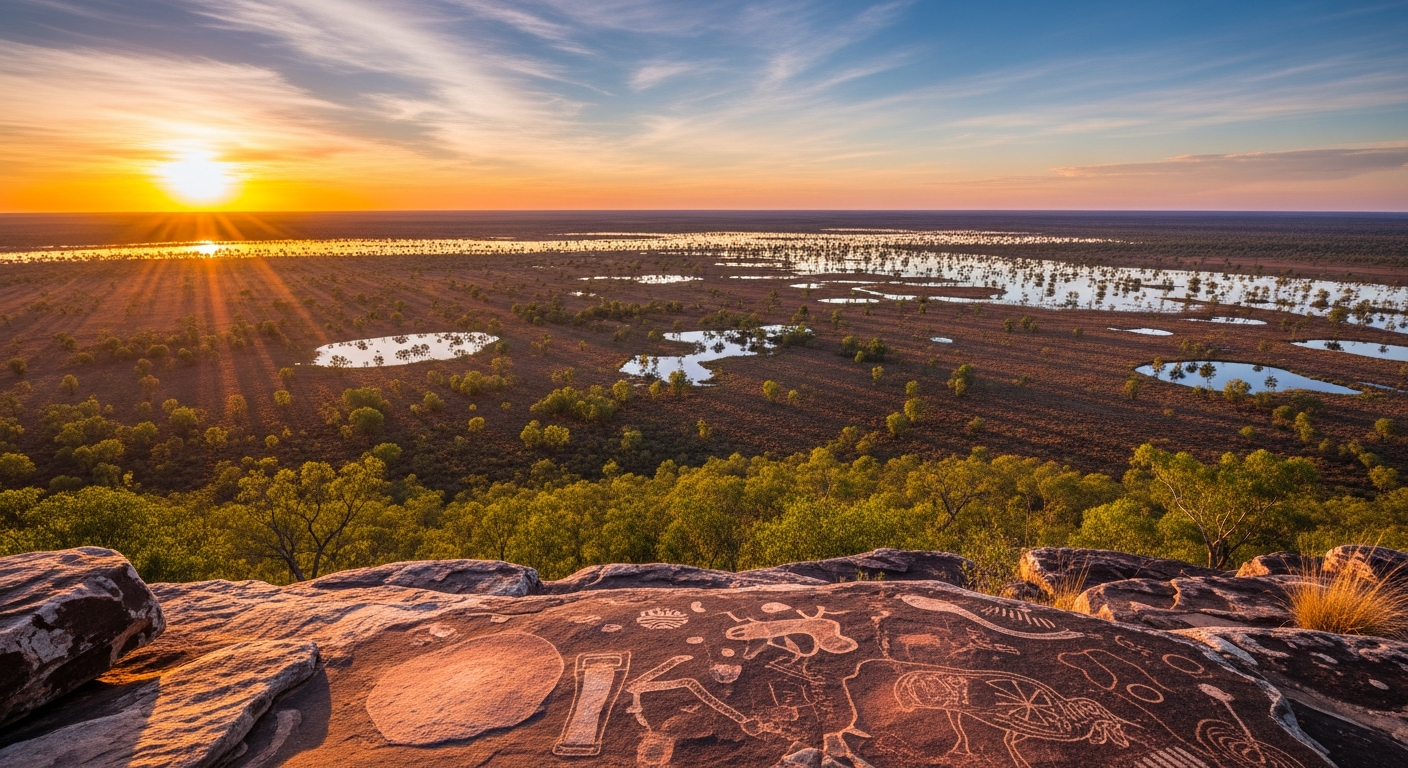
Kakadu National Park is Australia's largest national park and one of the most extraordinary natural and cultural landscapes on Earth. Covering nearly 20,000 square kilometres of the Top End, Kakadu protects a staggering diversity of ecosystems - from monsoon rainforest and tidal flats to sandstone escarpments and vast floodplains. The park has been home to Aboriginal people for over 65,000 years, making it one of the longest continuously inhabited places on the planet, and the rock art galleries at Ubirr and Nourlangie are among the finest and most significant in the world. Kakadu is also home to one-third of Australia's bird species and the world's largest concentration of saltwater crocodiles. It is a place of immense power, beauty, and ancient significance.
Getting There
Kakadu is located approximately 170km east of Darwin - about a 2.5-hour drive via the Arnhem Highway. The park is vast (nearly 200km from north to south), so a car is essential. 4WD is required for some attractions, particularly Jim Jim Falls and Twin Falls (accessible in the dry season only). Guided tours operate from Darwin for those without their own vehicle - day trips and multi-day safaris are available. There is no public transport to or within Kakadu.
Ubirr Rock Art
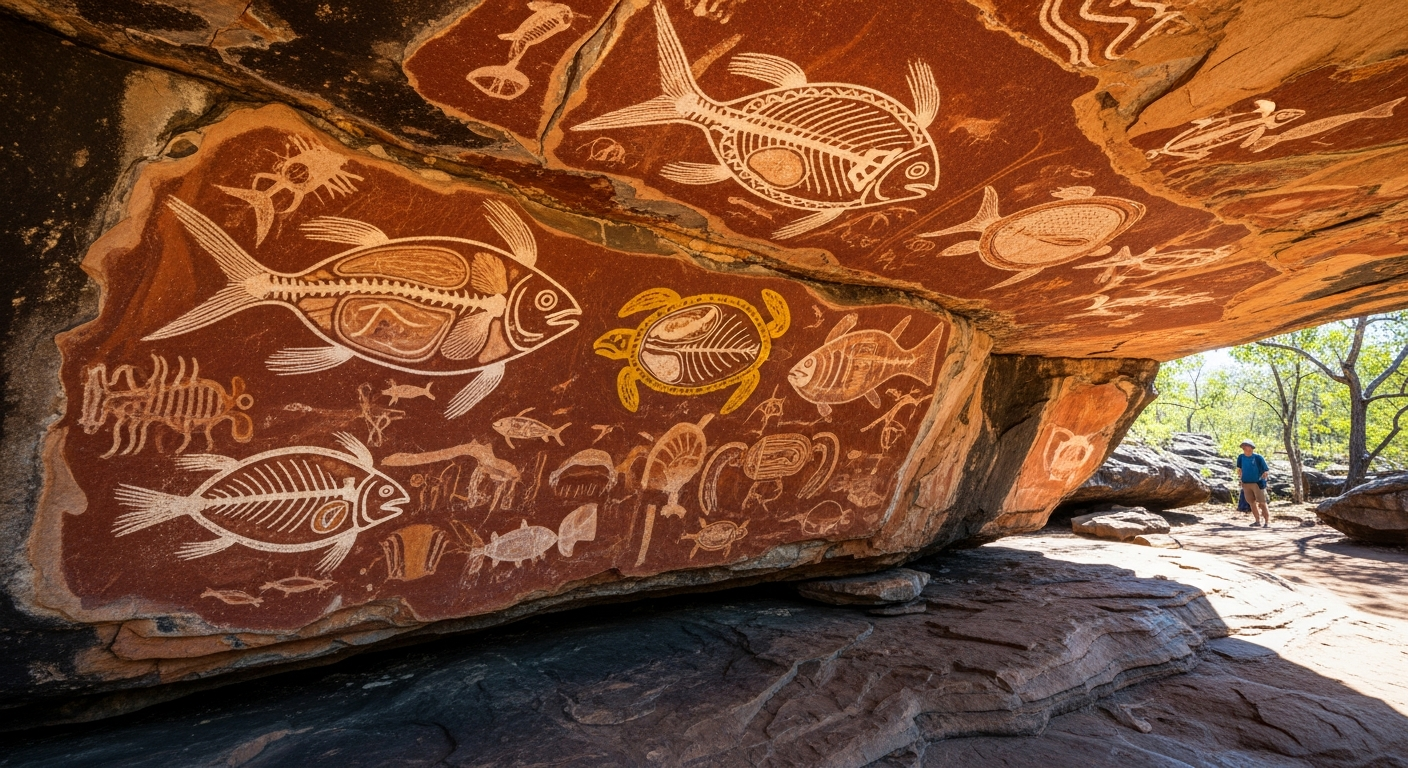
Ubirr is one of the most significant and accessible rock art sites in the world, located in the northern section of Kakadu:
- Main Gallery: A series of overhanging rock shelters adorned with thousands of years of layered rock art. The paintings depict fish (including barramundi and catfish), animals, human figures, and the powerful spirit figure Namarrgon (the Lightning Man). Some paintings are estimated to be over 20,000 years old.
- X-ray art: Ubirr is famous for its "X-ray" style paintings, which depict the internal organs and bone structures of animals - a distinctive artistic tradition unique to this region.
- Ubirr Lookout: A short climb above the galleries leads to Ubirr Lookout, which offers one of the most spectacular sunset views in Australia - a vast panorama across the Nadab floodplain stretching to the distant escarpment. Arrive at least 30 minutes before sunset.
- Nourlangie (Burrungkuy): Another major rock art site, featuring the famous painting of Namarrgon and an excellent 1.5km circular walk through sandstone galleries.
- Ranger talks: Free ranger-guided talks are offered at both Ubirr and Nourlangie during the dry season.
Jim Jim Falls
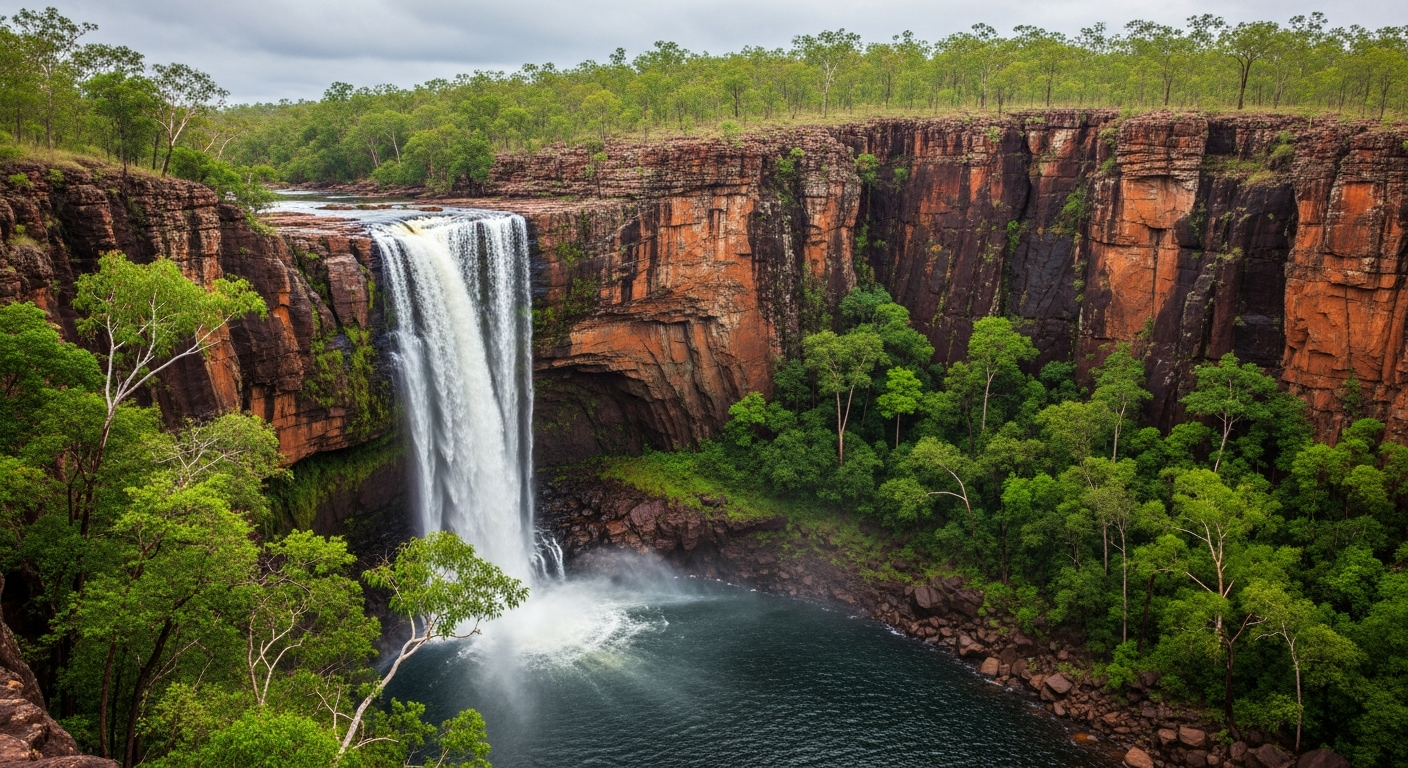
Jim Jim Falls is one of the most dramatic waterfalls in Australia - a sheer 200-metre drop over the Arnhem Land escarpment:
- The falls: In the wet season (December-March), Jim Jim Falls is a thundering torrent visible from scenic flights. In the dry season, the falls reduce to a trickle, but the towering escarpment and deep plunge pool remain spectacular.
- Access: Jim Jim Falls is reached via a 60km unsealed road (4WD only, dry season only - typically June to November). The last 900m is a rocky scramble over boulders to the plunge pool. The effort is rewarded with a stunning, cathedral-like amphitheatre of sheer sandstone walls.
- Swimming: The plunge pool at the base of the falls is deep, cold, and surrounded by towering cliffs. Swimming is permitted (crocodile traps are set and cleared regularly by rangers), but always check current safety signs.
- Twin Falls: Nearby Twin Falls is accessed by a short boat shuttle across a creek, followed by a walk and swim to the base of the falls. Equally spectacular.
- Scenic flights: During the wet season when the falls are inaccessible by road, scenic flights from Jabiru offer breathtaking aerial views of the escarpment and thundering waterfalls.
Yellow Water Billabong
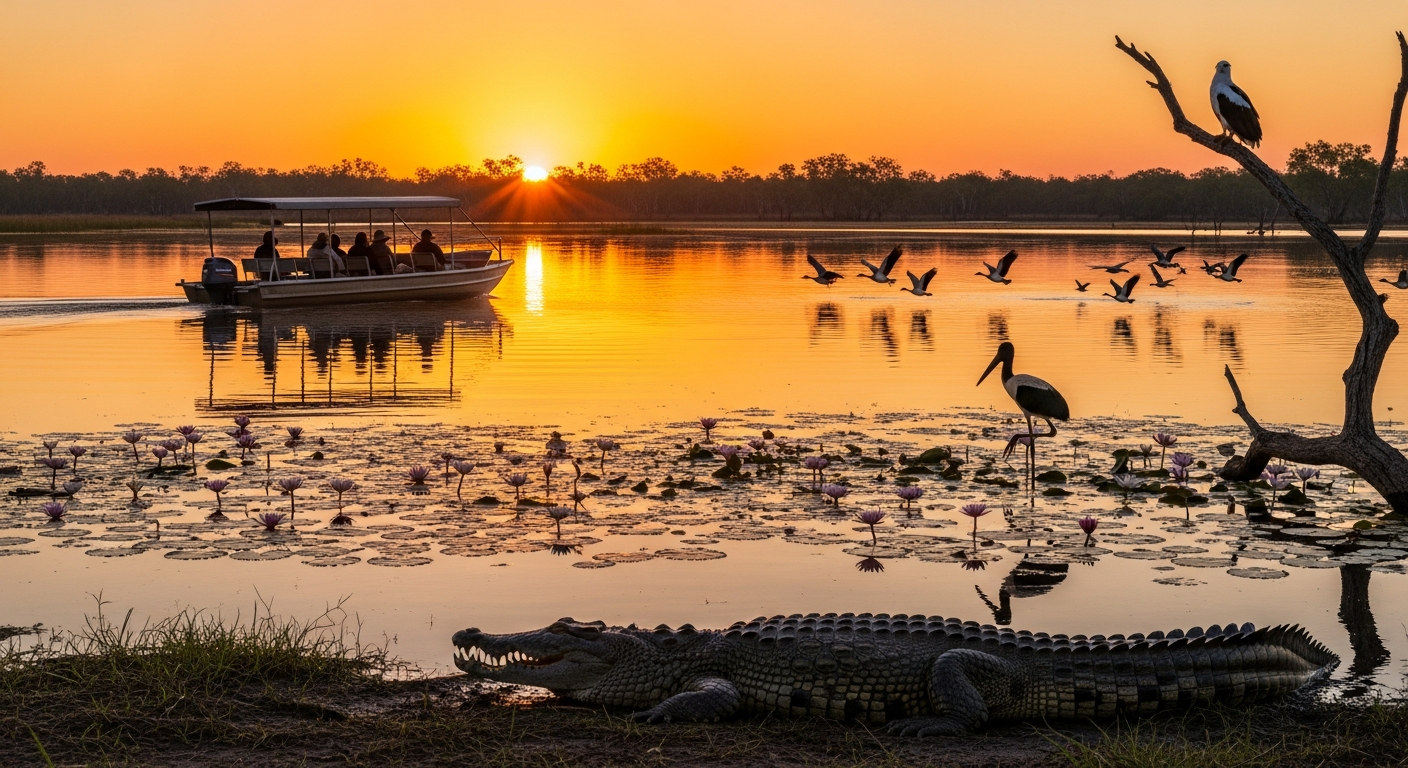
Yellow Water (Ngurrungurrudjba) is a vast billabong in the heart of Kakadu - one of the best wildlife viewing experiences in Australia:
- Cruise: Yellow Water Cruises operate 1.5 and 2-hour boat tours through the billabong, gliding past saltwater crocodiles basking on the banks, jabiru storks, sea eagles, magpie geese, and fields of lotus lilies. The sunrise cruise is the most spectacular - the mist rising from the water and the golden light create an ethereal atmosphere.
- Crocodiles: Saltwater crocodiles are abundant and visible year-round. Seeing a 4-5 metre crocodile in the wild from the safety of the boat is an unforgettable experience.
- Birdlife: Over 280 bird species have been recorded in Kakadu. Yellow Water is particularly rich - look for jabiru, brolga, sea eagles, jacana, and vast flocks of magpie geese.
- Booking: Cruises depart from Cooinda Lodge (from $72 adults for the 90-minute cruise, $99 for the 2-hour sunrise cruise). Book well in advance during the dry season.
Jabiru & Park Highlights
- Jabiru: The main town within Kakadu, with a visitor centre, fuel, accommodation, and supplies. The Bowali Visitor Centre has excellent displays about Kakadu's ecology, Aboriginal culture, and management. - Gunlom Falls: A stunning waterfall with a natural infinity pool at the top of the escarpment, offering panoramic views across southern Kakadu (4WD access, dry season only). - Maguk (Barramundi Gorge): A beautiful plunge pool and waterfall reached via a 2km walk through monsoon forest (4WD access). - Mamukala Wetlands: A bird-watching observation platform with views over wetlands teeming with birdlife, especially in the late dry season (September-October).
Where to Eat
- Cooinda Lodge Restaurant: (Cooinda): Buffet and a la carte dining overlooking the bush. Mains $25-40.
- Escarpment Restaurant: (Mercure Kakadu Crocodile Hotel, Jabiru): Regional cuisine with local ingredients. Mains $28-42.
- Anme Cafe: (Jabiru): Casual cafe with coffee, sandwiches, and light meals. Mains $12-20.
- Aurora Kakadu: (South Alligator): Bistro dining with steaks and barramundi. Mains $22-35.
- Self-catering: Jabiru has a small supermarket (IGA). Stock up before entering the park if you plan to camp.
Where to Stay
- Budget: Kakadu has numerous campgrounds - Merl (near Ubirr, $10/adult), Muirella Park (near Yellow Water, $15/adult), and Gunlom ($15/adult). Some have basic facilities, others are bush camps.
- Mid-Range: Cooinda Lodge (from $180), Aurora Kakadu (from $160), Anbinik Kakadu Resort Jabiru (from $170).
- Luxury: Mercure Kakadu Crocodile Hotel (from $220, shaped like a crocodile from above), Bamurru Plains (luxury safari lodge on the western edge, from $1,200/night all-inclusive).
Practical Tips
- Best time to visit: The dry season (May-October) is the best time - roads are open, waterholes are accessible, and wildlife concentrates around shrinking water sources. The wet season (November-April) brings dramatic storms and flooding - many roads and sites close, but scenic flights reveal thundering waterfalls and lush green landscapes. - Park entry: Kakadu National Park entry is $40 per adult (valid for 7 days). Children under 16 are free. - 4WD: A 4WD vehicle is required for Jim Jim Falls, Twin Falls, Gunlom, and Maguk. Many other attractions are accessible by 2WD. - Crocodile safety: Saltwater crocodiles are present in all waterways. Never swim unless the area is clearly signed as safe. - Duration: Allow a minimum of 3 days to see the highlights. 5 days allows a more relaxed exploration. - Fuel: Fuel is available at Jabiru, Cooinda, and Aurora Kakadu, but prices are higher than Darwin. Fill up before entering.
AUBIS Tip
: Kakadu is vast and requires planning. Use AUBIS to map out your Kakadu itinerary - book a sunrise Yellow Water cruise, schedule your Ubirr visit for late afternoon (for sunset from the lookout), plan the Jim Jim Falls 4WD adventure, and arrange accommodation at Cooinda or Jabiru. The platform will coordinate your Kakadu visit with Litchfield National Park and Darwin for the ultimate Top End experience.