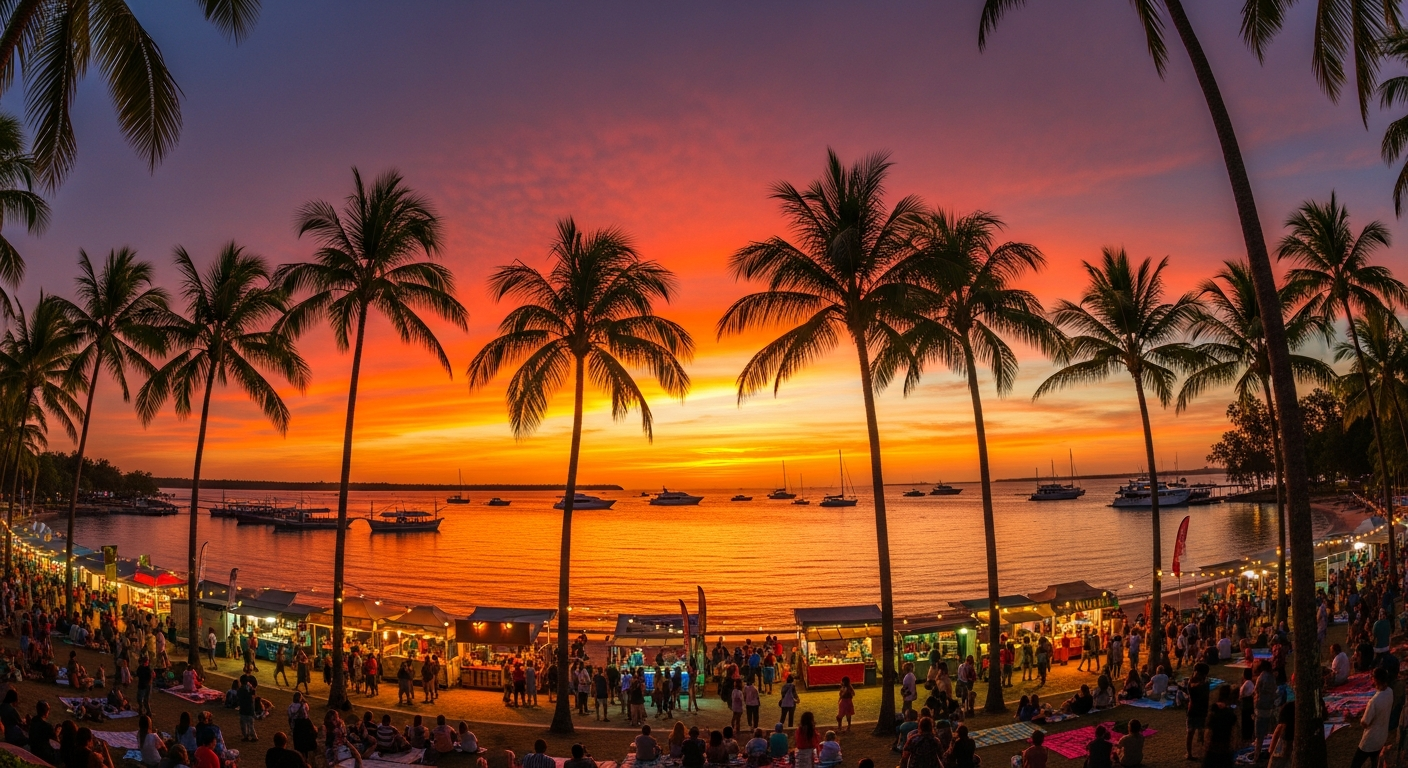
Darwin is Australia's most tropical capital city - a laid-back, multicultural frontier town where Southeast Asia meets the Australian outback. Perched on the edge of the Timor Sea, Darwin is defined by its dramatic wet and dry seasons, legendary sunsets, world-famous markets, and an ever-present reminder that you are firmly in crocodile country. Rebuilt after Cyclone Tracy devastated the city on Christmas Day 1974, modern Darwin is a vibrant mix of open-air dining, waterfront precincts, military history, and Indigenous culture. It is the gateway to Kakadu, Litchfield, and the Top End's vast wilderness, but the city itself has more than enough to fill several unforgettable days.
Getting There
Darwin is approximately 1,500km from Alice Springs (a 15-hour drive along the Stuart Highway) and over 4,000km from Sydney by road. Most visitors fly - Darwin International Airport receives direct flights from Sydney, Melbourne, Brisbane, Perth, Adelaide, and Cairns, as well as international flights from Singapore, Bali, and Dili. The Ghan train runs between Adelaide and Darwin (a legendary 2-day journey). Once in Darwin, a car is useful for exploring the greater Darwin region, but the city centre, waterfront, and key attractions are easily accessible on foot, by bus, or via rideshare.
Mindil Beach Sunset Markets
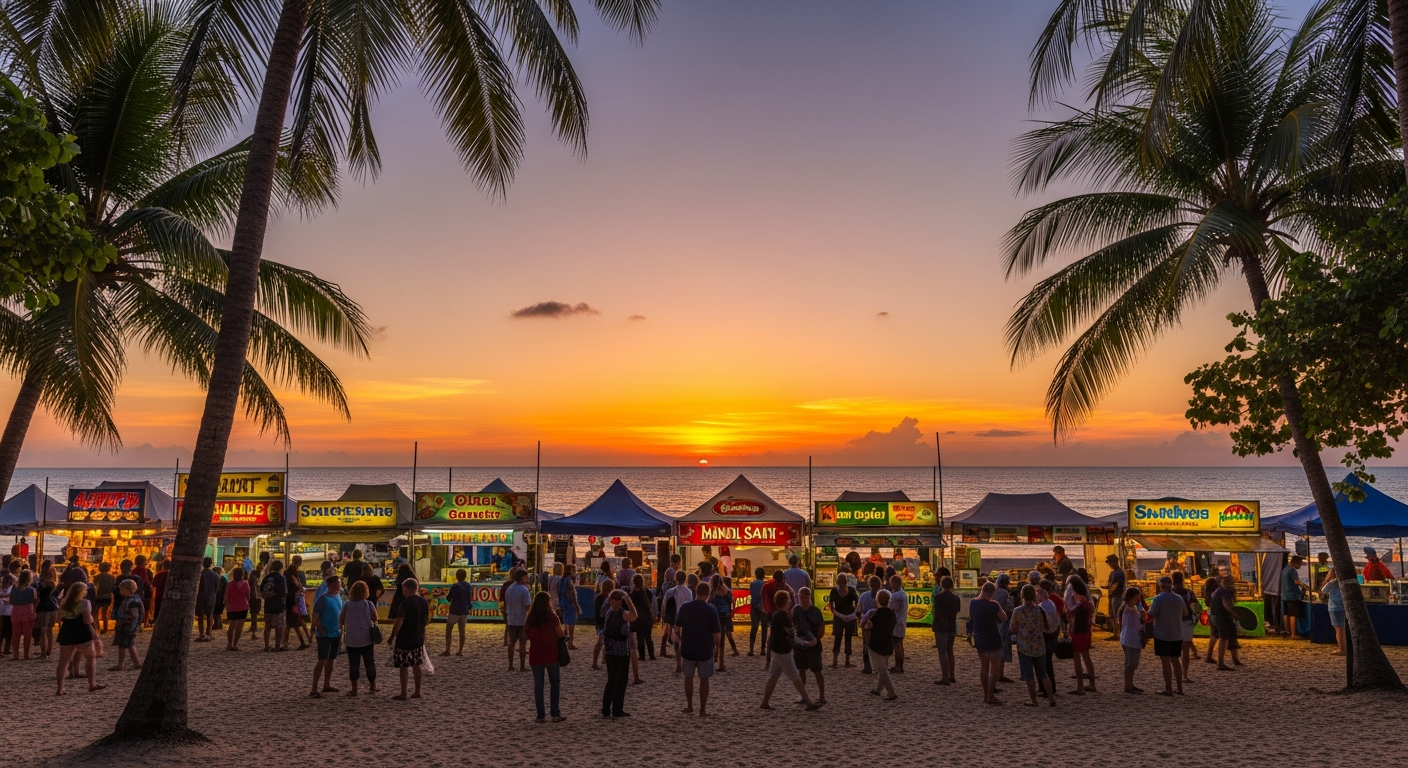
The Mindil Beach Sunset Markets are Darwin's most iconic experience - a vibrant open-air market held on the beach every Thursday and Sunday evening during the dry season (April-October):
- Food stalls: Over 60 food stalls serve cuisines from around the world - Thai, Indonesian, Greek, Sri Lankan, Indian, Chinese, Brazilian, crocodile, barramundi, and more. Most dishes cost $8-16, and the quality is outstanding.
- Sunset: The markets are timed to coincide with Darwin's legendary sunsets. Grab your food, find a spot on the sand, and watch the sun drop into the Timor Sea in a blaze of orange and crimson. It is one of the great Australian experiences.
- Entertainment: Live music, buskers, fire twirlers, and performers create a festival atmosphere every market night.
- Art and craft: Over 200 stalls sell local art, Indigenous crafts, jewellery, clothing, and souvenirs.
- Timing: Markets run from 5pm-10pm. Arrive by 5:30pm to browse the stalls before grabbing food for sunset (around 6:30-7pm in the dry season).
Crocodile Encounters
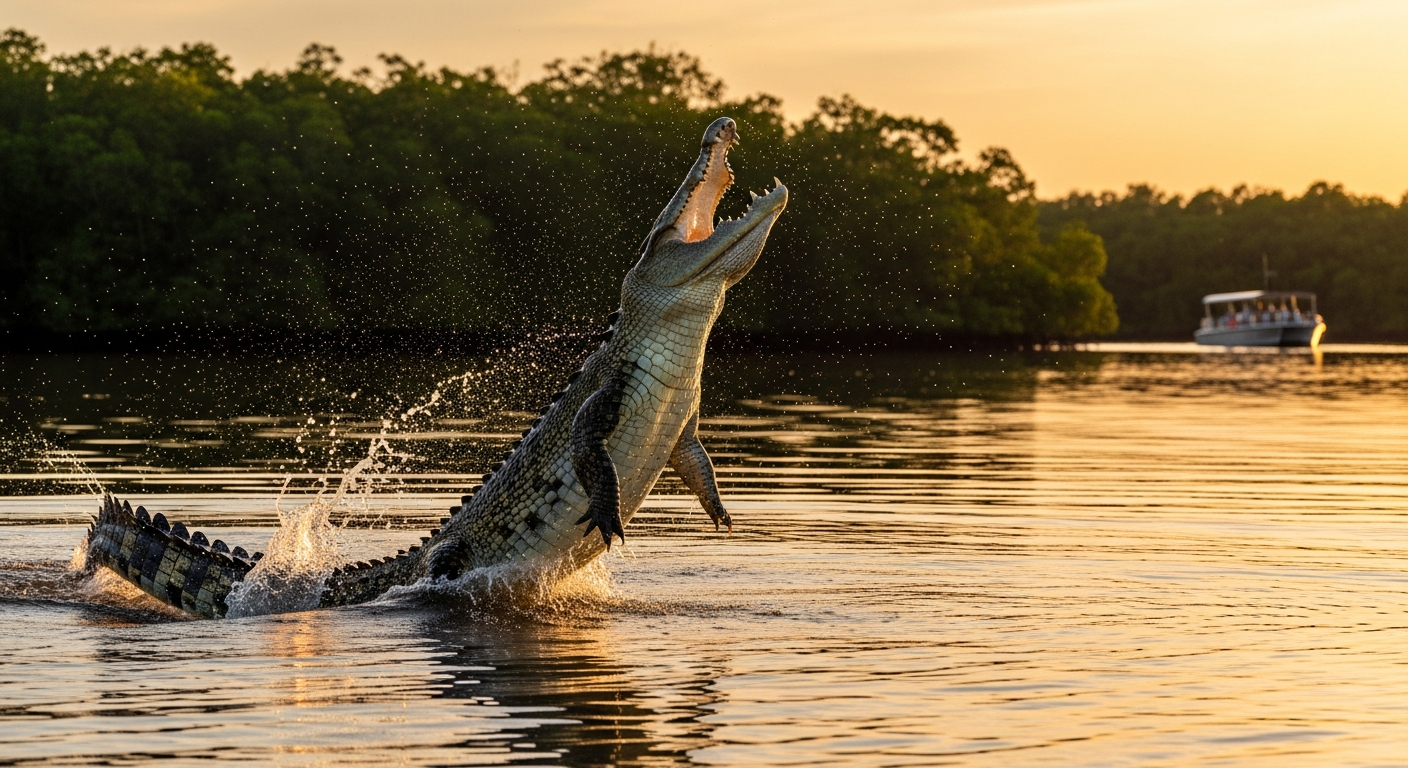
The Top End is home to the world's largest population of saltwater crocodiles, and encountering these prehistoric predators is a quintessential Darwin experience:
- Adelaide River Jumping Crocodile Cruise: The most famous croc experience. Cruise boats on the Adelaide River (60km south of Darwin) dangle bait from poles, and massive saltwater crocodiles launch themselves vertically out of the water to grab it. Seeing a 5-metre crocodile propel its full body out of the water is utterly jaw-dropping. Several operators run cruises (from $45 adults, 1-2 hours).
- Crocosaurus Cove: Right in the Darwin CBD, this attraction houses the largest display of Australian reptiles. The star attraction is the "Cage of Death" - a clear acrylic cylinder lowered into an enclosure with a massive saltwater crocodile. You can also hold baby crocs, feed juveniles, and see some of the largest captive saltwater crocodiles in the world (adults $38, Cage of Death from $170).
- Crocodylus Park: A crocodile farm and wildlife park on the outskirts of Darwin, with crocodile feeding shows, a small zoo, and educational displays (adults $40).
- Safety: Never swim in waterways in the Top End unless clearly signed as safe. Saltwater crocodiles inhabit rivers, estuaries, beaches, and even open ocean.
Darwin Waterfront Precinct
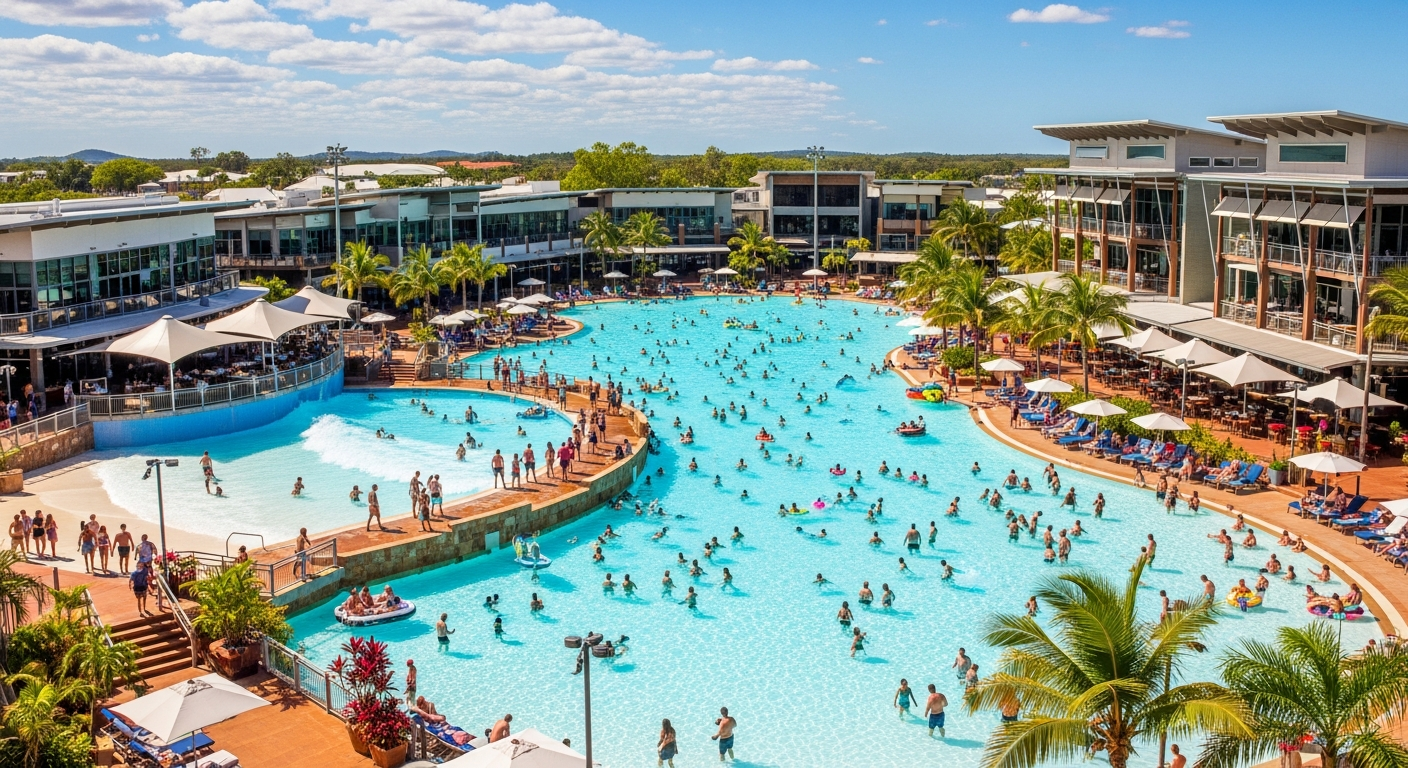
The Darwin Waterfront Precinct is the city's premier dining, entertainment, and recreation hub - a modern development on the edge of the CBD:
- Wave Lagoon: A man-made swimming lagoon with artificial waves - one of the few places in Darwin where you can swim safely year-round (no crocs or stingers). Entry $7 adults.
- Recreation Lagoon: A free, calm-water lagoon perfect for families. Shaded areas and grassy surrounds.
- Dining: A strip of restaurants and bars line the waterfront, serving everything from fine dining to casual fish and chips. Popular spots include Wharf One, Hot Tamale, and Il Piatto.
- WWII Oil Storage Tunnels: Built during WWII to protect Darwin's fuel supplies from Japanese air raids, these tunnels are now open to visitors as a fascinating museum and gallery space (free entry).
- Stokes Hill Wharf: Extending into the harbour, the wharf has seafood restaurants, fishing, and sunset views.
WWII History
Darwin is the only Australian capital city to have been significantly attacked during wartime. On 19 February 1942, 188 Japanese aircraft bombed Darwin in two devastating raids - killing 235 people and destroying much of the town:
- Defence of Darwin Experience: An excellent multimedia museum at East Point telling the story of the bombing of Darwin (adults $22).
- East Point Military Museum: Located in a WWII command bunker with military artefacts, gun emplacements, and sweeping harbour views.
- Darwin Military Museum: Covers Darwin's military history from WWII to the present day.
- Bombing of Darwin Memorial: A moving memorial on the Esplanade honouring those who lost their lives.
Where to Eat
- Mindil Beach Sunset Markets: (Mindil Beach): The ultimate Darwin dining experience (dry season only). 60+ food stalls, $8-16 per dish.
- Pee Wee's at the Point: (East Point): Fine dining with harbour views, specialising in local barramundi and seafood. Mains $38-55.
- Hanuman: (Mitchell St): Award-winning Thai and Indian cuisine in an elegant setting. Mains $28-42.
- Wharf One: (Waterfront Precinct): Waterfront dining with fresh seafood and steaks. Mains $26-45.
- The Precinct Tavern: (Waterfront): Casual pub dining with craft beers and harbour views. Mains $18-28.
Where to Stay
- Budget: Darwin YHA (from $28 dorms/$90 private), Melaleuca on Mitchell Backpackers (from $26 dorms).
- Mid-Range: Vibe Hotel Darwin Waterfront (from $180), Palms City Resort (from $140), Mantra on the Esplanade (from $170).
- Luxury: Mindil Beach Casino Resort (from $280), Hilton Darwin (from $250), H Hotel (from $220).
Practical Tips
- Best time to visit: The dry season (May-October) is the best time - sunny skies, low humidity, comfortable temperatures (20-32C), and all attractions and markets are operating. The wet season (November-April) brings dramatic thunderstorms, high humidity, and some road closures, but the landscape is lush and green, and there are fewer tourists. - Stingers: Box jellyfish (marine stingers) are present in Top End waters from October to May. Swim only in designated stinger nets or the waterfront lagoons during this period. - Crocodile safety: Obey all crocodile warning signs. Never swim in rivers, estuaries, or the open ocean in the Top End. Crocodiles are present in almost all waterways. - Sun protection: Darwin has intense tropical sun. Wear sunscreen (SPF 50+), a hat, and sunglasses at all times. - Multicultural food: Darwin's multicultural population means outstanding Asian food - the markets, Mitchell Street, and Parap Village are all excellent.
AUBIS Tip
: Darwin is the perfect base for exploring Australia's Top End. Use AUBIS to plan your Darwin stay - book Mindil Beach market evenings, schedule a jumping crocodile cruise on the Adelaide River, explore the Waterfront Precinct, and arrange day trips to Litchfield National Park. The platform will help you coordinate your Darwin visit with onward travel to Kakadu, Katherine Gorge, and the Tiwi Islands.