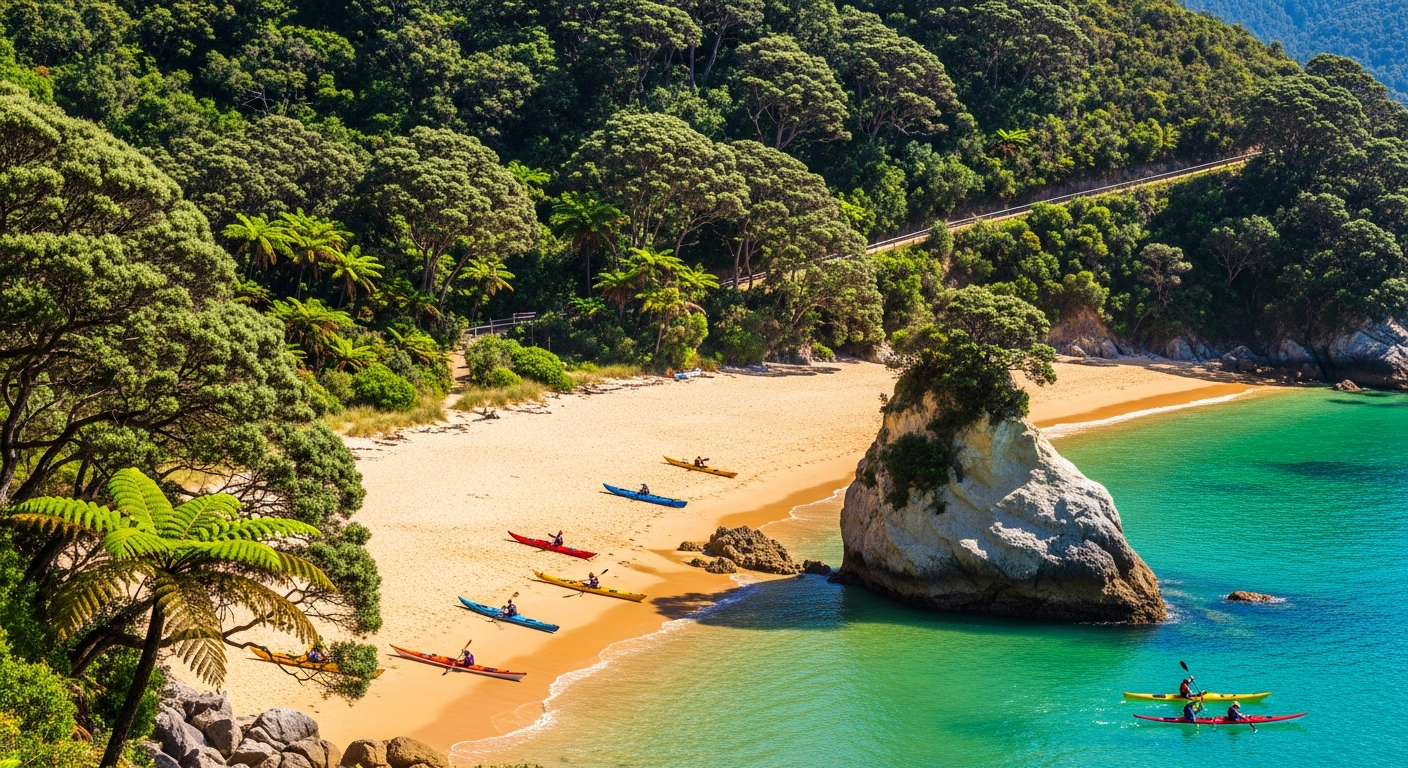
Abel Tasman National Park is New Zealand's smallest national park but arguably its most beautiful - a 22,530-hectare coastal paradise at the top of the South Island, where golden sand beaches are separated by granite headlands, and crystal-clear turquoise water laps against shores backed by native bush. The park is named after Dutch explorer Abel Tasman, who anchored here in 1642 (his first European encounter with Māori ended badly - and he sailed away without landing). Today, the Abel Tasman Coastal Track is one of New Zealand's Great Walks - a 60km, 3–5 day trail linking beach after gorgeous beach. But you don't need to walk the full track: day walks, water taxis, sea kayaking, and boat cruises let you access the park's highlights in a single day.
Getting There
The park is at the northern tip of the South Island, accessible from Nelson (70km, 1 hour) or Motueka (20km, 20 minutes). The main trailheads are at Mārahau (southern end) and Wainui (northern end). Water taxis from Mārahau and Kaiteriteri connect with beaches along the coast. Nelson Airport (NSN) has flights from Auckland, Wellington, and Christchurch.
The Coastal Track
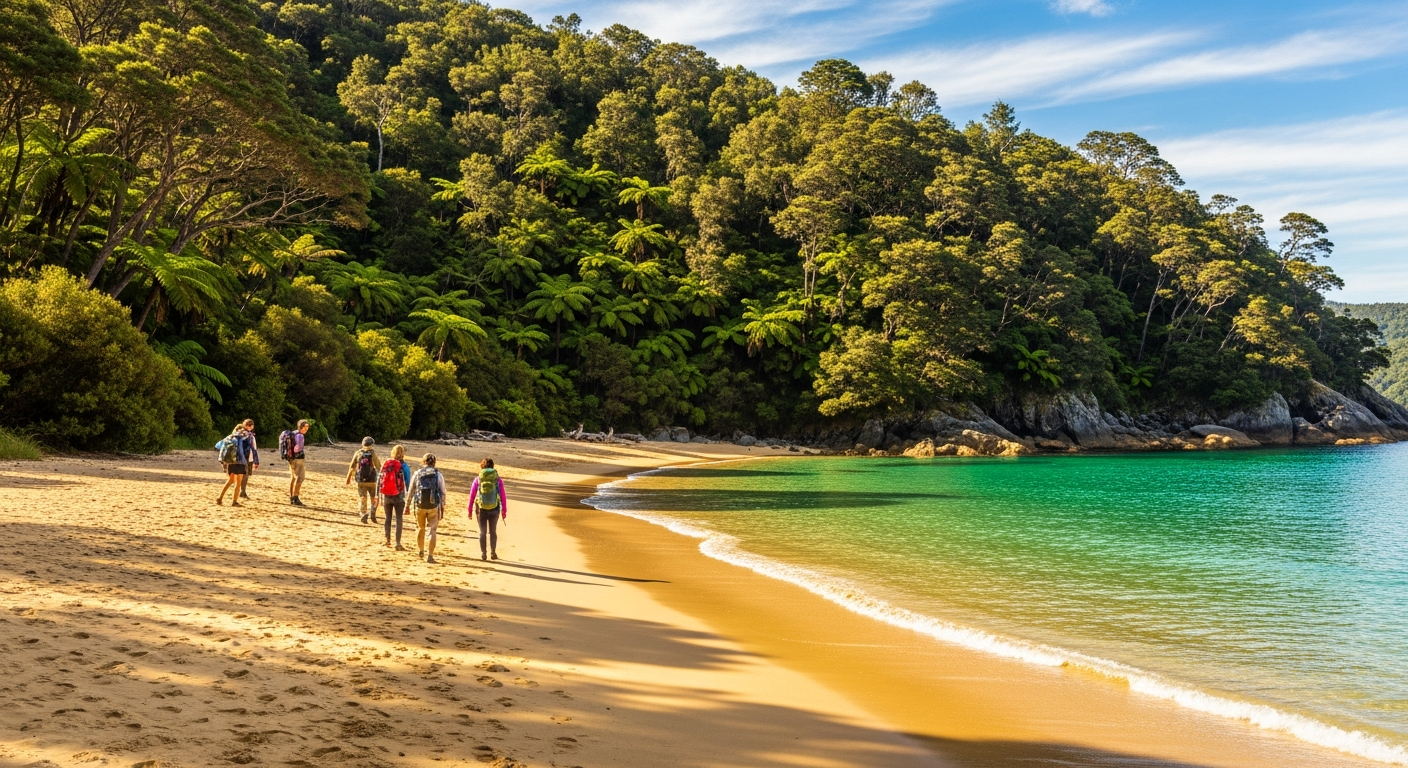
The Abel Tasman Coastal Track is one of New Zealand's nine Great Walks:
- Full walk: 60km, 3–5 days, staying in DOC huts ($36/night) or campsites ($16/night). The track is well-maintained and relatively easy, passing through native bush with regular beach access.
- Day walks: The most popular day walks are Mārahau to Anchorage (4 hours one-way) or water taxi to Bark Bay and walk back to Mārahau (4–5 hours). Water taxis ($45–70) let you skip sections and access the best beaches.
- Highlights: Torrent Bay inlet crossing (tide-dependent), Bark Bay with its lagoon, Onetahuti Beach, and Tonga Quarry.
- Beaches: Every beach is stunning - golden sand, clear water, native bush to the shore. Anchorage, Bark Bay, Medlands, and Awaroa are standouts.
- Swimming: The water is clear and warm enough for swimming from December to March (18–20°C). Many beaches have gentle entry and sheltered bays.
Sea Kayaking
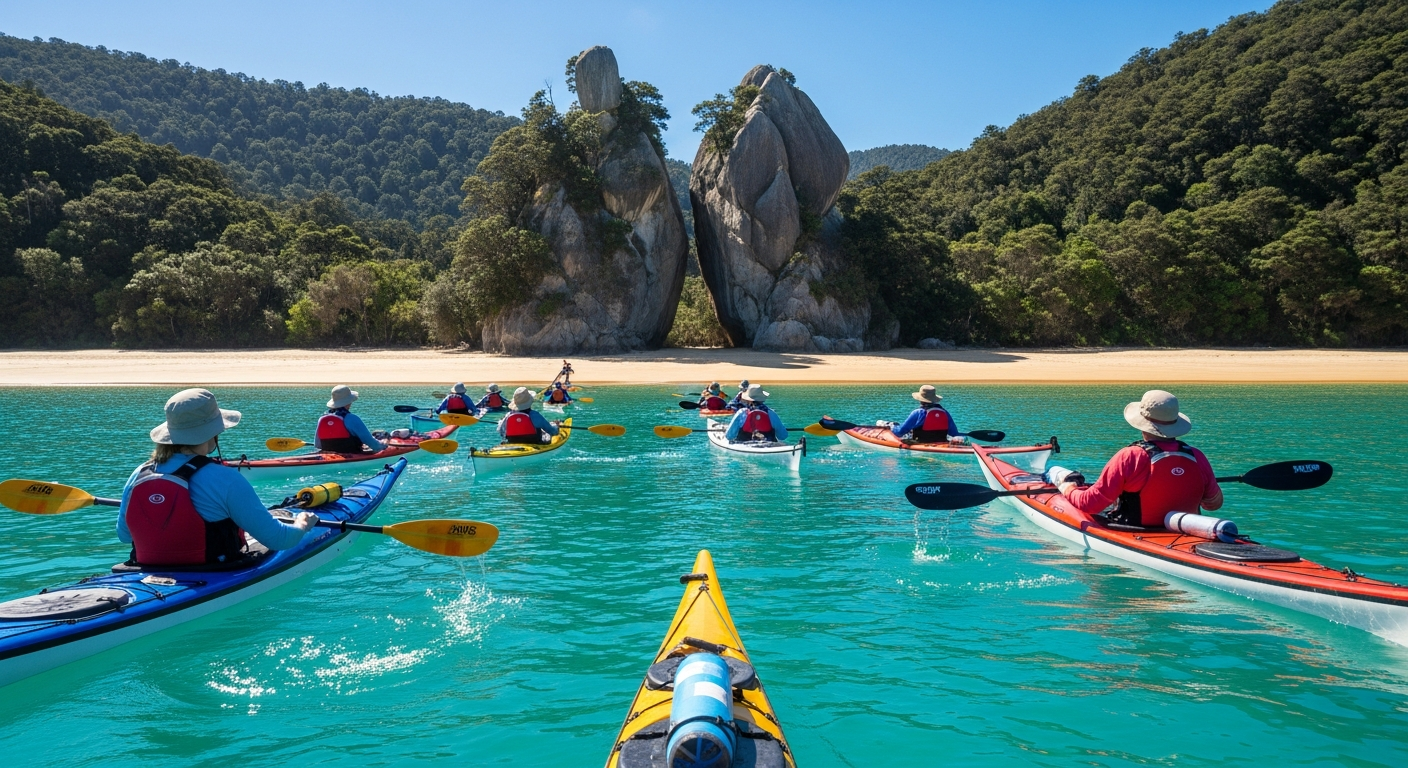
Sea kayaking is the quintessential Abel Tasman experience:
- Day trips: Guided half-day and full-day kayaking trips from Mārahau and Kaiteriteri paddle along the coastline, visiting beaches, sea caves, and Split Apple Rock (a granite boulder split perfectly in two). From $115 half-day, $175 full-day.
- Multi-day trips: 2–3 day guided kayak-camping trips combine paddling with beach camping - a magical way to experience the park (from $350).
- Freedom kayaking: Experienced kayakers can hire kayaks and explore independently (from $95/day).
- Split Apple Rock: The park's most famous landmark - a perfectly split granite boulder in the sea near Kaiteriteri. Kayak right up to it.
- Conditions: The coastline is generally sheltered, making it suitable for beginners. Guides provide all equipment and instruction.
Wildlife & Nature
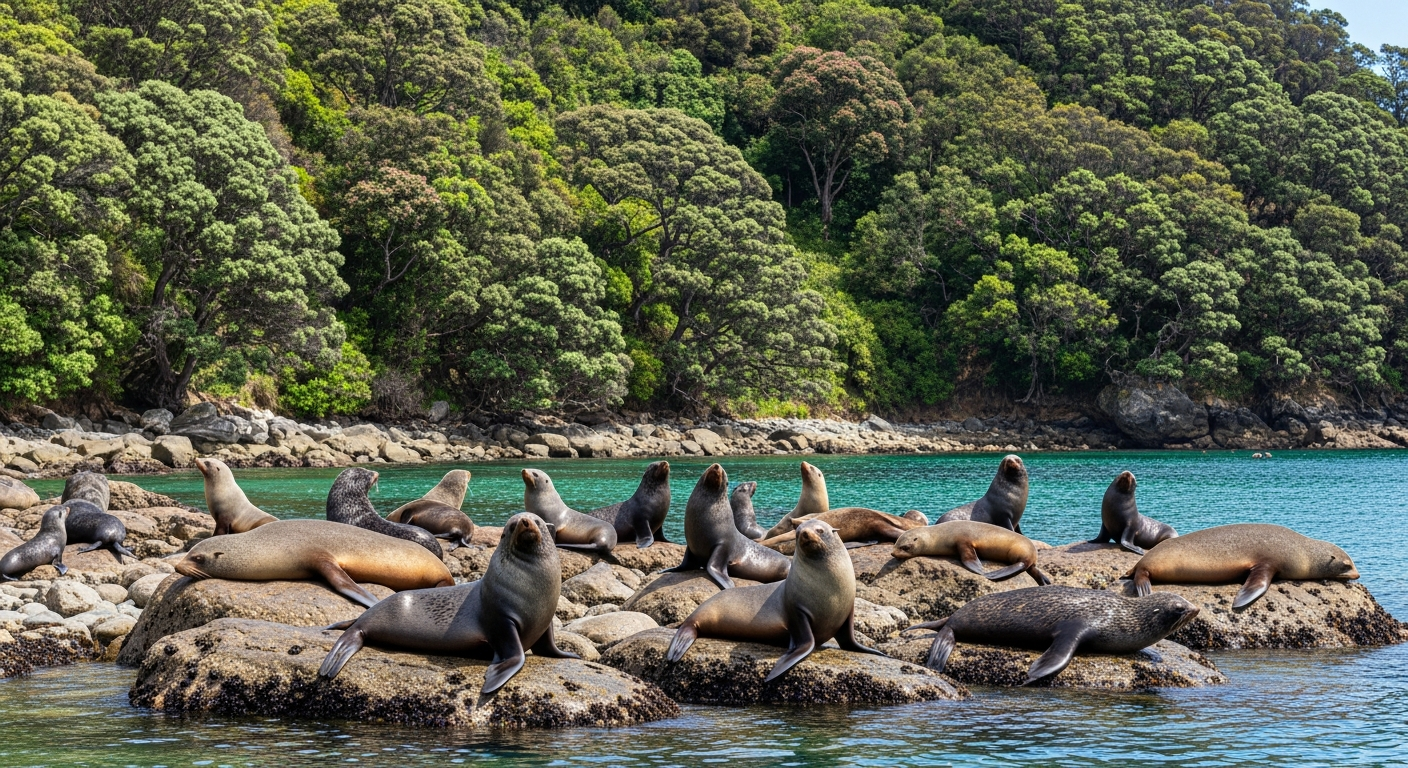
- Tonga Island Marine Reserve: A marine reserve protecting the waters around Tonga Island. Snorkelling reveals fish, starfish, and kelp forests. The island is home to a New Zealand fur seal colony - seals bask on the rocks and pups play in the shallows (best viewed from kayak or water taxi).
- Birdlife: The park supports tūī, bellbirds, fantails, kererū (native wood pigeon), oystercatchers, and penguins (little blue penguins can sometimes be seen at dusk).
- Native bush: The track passes through regenerating native bush - mānuka, kānuka, beech forest, tree ferns, and nīkau palms.
- Predator-free project: Abel Tasman is part of a major predator control programme, and native wildlife is recovering.
Where to Eat
- Fat Tui (Mārahau): Excellent burgers, fish tacos, and craft beer - the go-to after a day on the track or water. - Hooked on Mārahau: Fresh local seafood, right at the park entrance. - Motueka Sunday Market: Local produce, baked goods, and artisan food. - Nelson dining: The nearby city of Nelson has an excellent food scene - Hopgood's, Ford's, and The Indian Café.
Where to Stay
- Abel Tasman Lodge (luxury lodge near Mārahau - from $350/night) - Kimi Ora Eco Resort (spa retreat in the hills - from $250/night) - Mārahau Beach Camp (beachfront holiday park - from $50/cabin) - DOC huts & campsites (on the track - from $16/night, book via DOC) - Awaroa Lodge (remote luxury, accessible only by water taxi or on foot - from $280/night)
Practical Tips
- Book Great Walk hut and campsite passes through DOC in advance - especially for December–February. - Water taxis are essential for day trip planning - book ahead in summer. - Bring sandfly repellent - the Abel Tasman has fierce sandflies. - The best time to visit is December–March (warmest water, longest days). - Tide times affect some track sections (Torrent Bay, Awaroa Inlet) - check times and plan accordingly.
AUBIS Tip
: Abel Tasman is perfect for 1–3 days. Use AUBIS to book sea kayaking, water taxi transfers, and coastal accommodation - the platform will coordinate tide times and transport so you get the most out of this golden paradise.