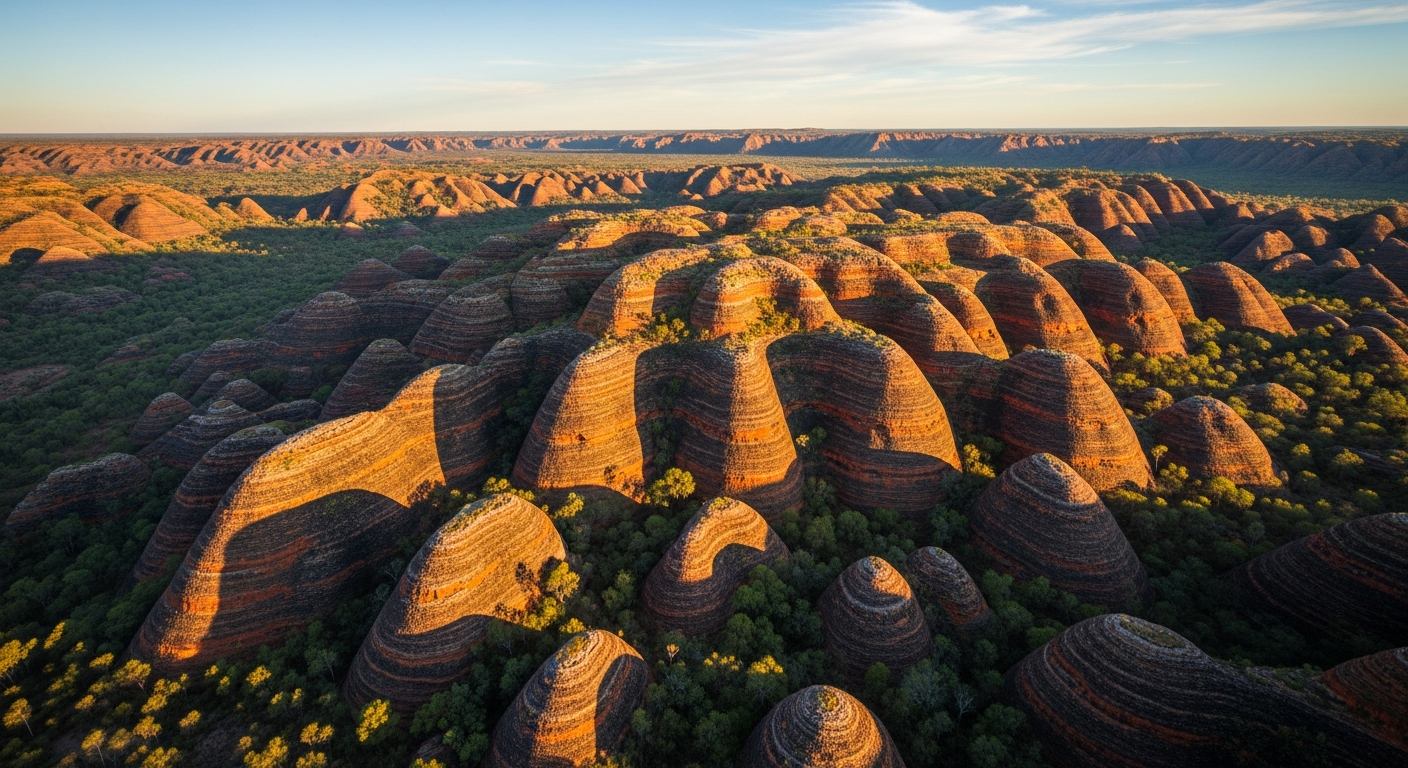
The Kimberley is one of the last great wilderness regions on Earth - a vast, ancient landscape of rugged red gorges, thundering waterfalls, boab-studded savanna, and a pristine coastline that stretches across an area three times the size of England with a population of fewer than 40,000 people. Located in Western Australia's far north, the Kimberley is defined by its extremes: wet season floods that transform the landscape into a network of cascading waterfalls, dry season heat that bakes the red earth, and a geological history stretching back over two billion years. The Bungle Bungle Range, the Gibb River Road, Mitchell Falls, and the Kimberley coast are among Australia's most extraordinary natural attractions.
Getting There
The Kimberley is accessed via Broome (west) or Kununurra (east). Broome Airport (BME) and Kununurra Airport (KNX) both receive flights from Perth (2.5 hours to Broome, 3.5 hours to Kununurra). The Gibb River Road connects Broome to Kununurra (660km), while the Great Northern Highway offers a sealed alternative via Fitzroy Crossing and Halls Creek. The Kimberley is a 4WD destination - most attractions require high-clearance 4WD vehicles, and the Gibb River Road is unsealed. Many visitors explore the Kimberley on organised tours (self-drive 4WD, guided 4WD, scenic flights, or Kimberley coast cruises). The dry season (May-October) is the only practical time to visit, as wet season rains (November-April) close most roads and access points.
Bungle Bungle Range (Purnululu)
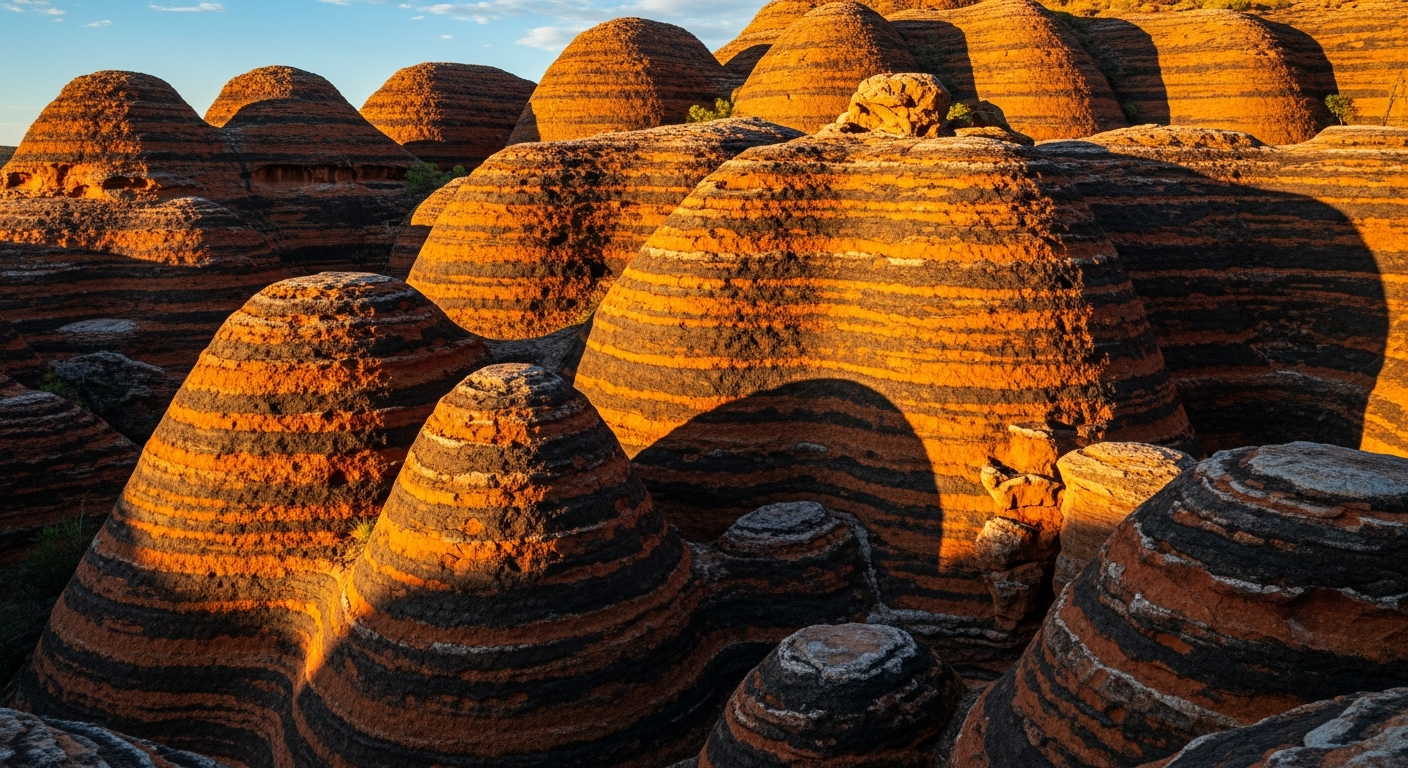
The Bungle Bungle Range in Purnululu National Park is one of Australia's most extraordinary geological formations - a maze of enormous sandstone domes striped in alternating bands of orange and dark grey:
- The domes: The beehive-shaped domes rise up to 250 metres and cover an area of over 450 square kilometres. The orange bands are formed by iron and manganese oxide deposits, while the dark bands contain cyanobacterial crust. The formations are over 350 million years old.
- Cathedral Gorge: The signature walk - a 3km return trail into a massive natural amphitheatre with extraordinary acoustics. The towering walls and domed ceiling create one of the most awe-inspiring natural spaces in Australia.
- Echidna Chasm: A narrow slot canyon in the northern part of the range. At midday, sunlight streams into the narrow chasm, illuminating the red walls in a blaze of colour. The walk is 2km return.
- Mini Palms Gorge: A longer walk (5km return) through fan palm-lined gorges and past the distinctive domes.
- Access: The park is reached via a rough 53km track from the Great Northern Highway - allow 2-3 hours each way. High-clearance 4WD only. Alternatively, scenic flights from Kununurra, Halls Creek, or Warmun offer spectacular aerial views of the domes (from $280).
- UNESCO World Heritage: Purnululu was inscribed on the World Heritage List in 2003 for its outstanding natural beauty and geological significance.
Gorge Swimming & Freshwater Pools
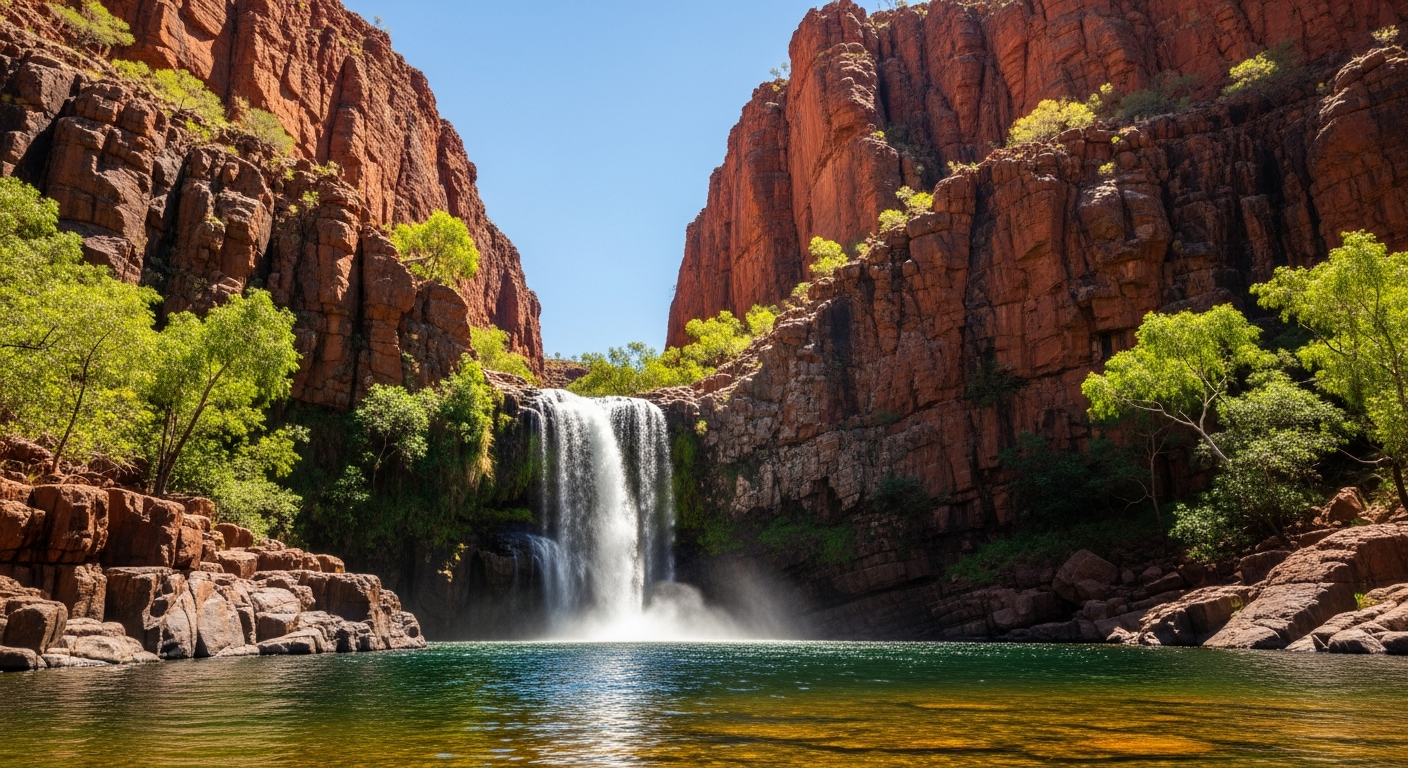
The Kimberley's gorges contain some of Australia's most spectacular freshwater swimming holes:
- El Questro Gorge: A stunning gorge on El Questro Wilderness Park, requiring a rocky scramble to reach a series of palm-fringed pools and small waterfalls. One of the Kimberley's must-do experiences.
- Emma Gorge: Also at El Questro - a 3km return walk to a large plunge pool beneath towering red cliffs and a natural hot spring. The walk is moderately challenging.
- Zebedee Springs: Natural thermal springs nestled among palm trees at El Questro. Open to visitors in the morning only, with warm mineral water flowing through a lush tropical setting.
- Bell Gorge: Often regarded as the most beautiful waterfall in the Kimberley. A tiered waterfall cascading into a large, clear swimming hole surrounded by ancient sandstone. Access via the Gibb River Road.
- Manning Gorge: A beautiful swimming hole and waterfall accessed by a river crossing and 3km walk through savanna woodland. Camp at the nearby Manning Gorge campground.
- Galvans Gorge: A small but beautiful waterfall and swimming hole right off the Gibb River Road - one of the most accessible Kimberley swimming spots.
Gibb River Road
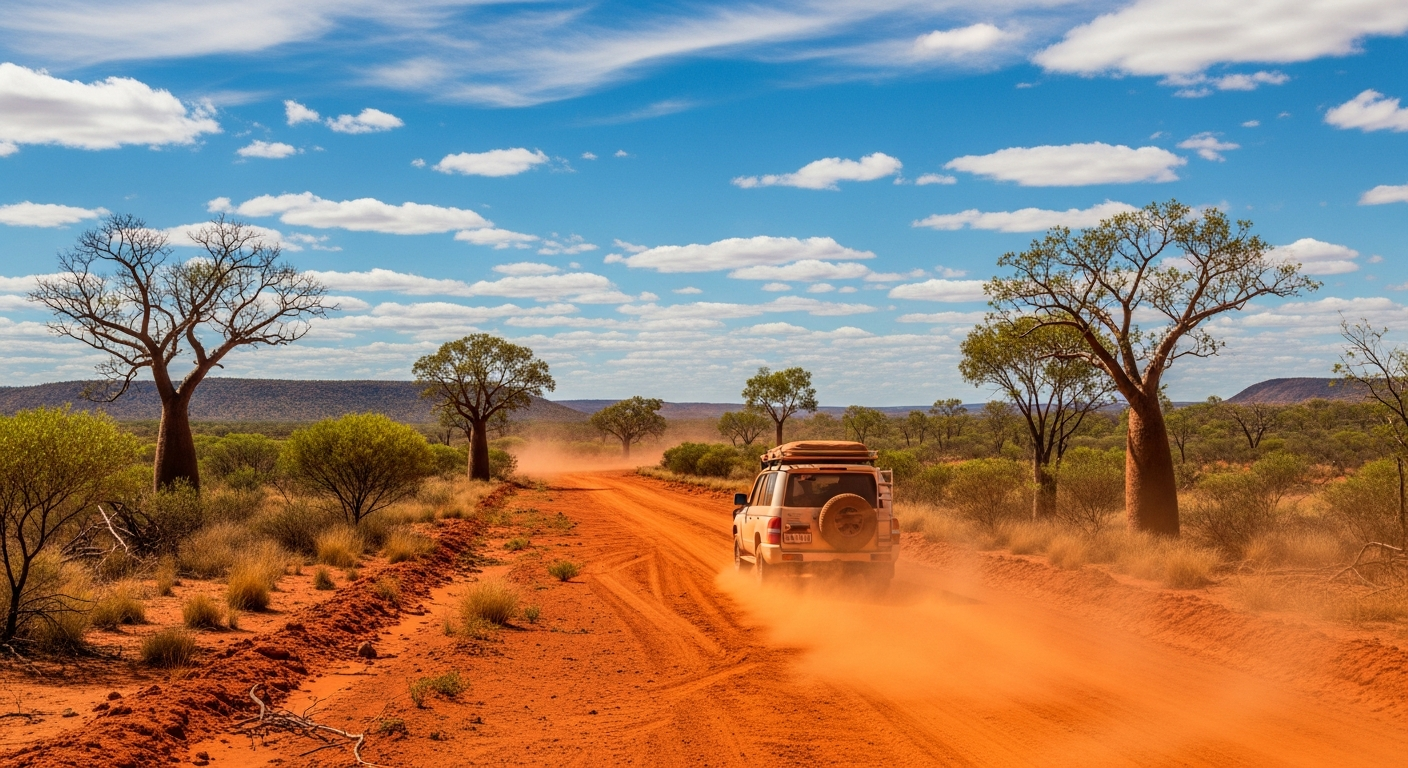
The Gibb River Road is one of Australia's great outback driving adventures - a 660km unsealed road connecting Derby (near Broome) to Kununurra through the heart of the Kimberley:
- The drive: The road passes through vast cattle stations, ancient ranges, and river crossings. It is challenging but rewarding, with corrugated sections, creek crossings, and limited services. Allow 4-7 days to do the road justice, with detours to gorges and waterfalls.
- Key stops: Bell Gorge, Manning Gorge, Galvans Gorge, El Questro Wilderness Park, Home Valley Station, and Mount Elizabeth Station.
- El Questro: A million-acre wilderness park offering everything from budget camping to luxury accommodation at the Emma Gorge Resort and El Questro Homestead. Activities include gorge walks, thermal springs, horse riding, heli-fishing, and barramundi fishing.
- Home Valley Station: A working cattle station offering accommodation, Indigenous cultural tours, horse riding, and barramundi fishing.
- Services: There are very few services along the Gibb River Road. Carry extra fuel, water, food, and a satellite phone or EPIRB. The nearest mechanical assistance is hours away.
Mitchell Falls
Mitchell Falls (Punamii-Uunpuu) is one of the Kimberley's most spectacular sights - a four-tiered waterfall cascading into pools surrounded by ancient sandstone and Indigenous rock art:
- Access: Mitchell Falls is reached via a 90km unsealed track off the Kalumburu Road (4WD only). The walk from the Mitchell Plateau car park to the falls is 8.6km return (allow 4-6 hours). Alternatively, helicopter flights from the car park offer spectacular aerial views and a landing at the top of the falls (from $290).
- Rock art: The Mitchell Plateau is home to significant Gwion Gwion (Bradshaw) rock art - some of the oldest figurative art in the world, estimated at 15,000-40,000 years old.
Where to Eat
- El Questro Station Restaurant: (El Questro): Outback dining with Kimberley beef and barramundi. Mains $28-42.
- Kimberley Hotel: (Halls Creek): Classic outback pub meals. Mains $18-30.
- The Pump House: (Kununurra): Modern Australian dining in a historic pumphouse on the lake. Mains $28-40.
- Wild Mango: (Kununurra): Casual cafe with excellent breakfasts and lunches. Mains $16-26.
Where to Stay
- Budget: Camping is the primary accommodation in the Kimberley. Bush campgrounds along the Gibb River Road range from free to $15 per person. El Questro campground from $18 per person.
- Mid-Range: El Questro Emma Gorge Resort (safari-style tented cabins, from $250), Home Valley Station (from $180).
- Luxury: El Questro Homestead (exclusive luxury lodge, from $1,800 per person all-inclusive), Berkeley River Lodge (remote luxury on the Kimberley coast, accessible only by air or sea, from $1,200 per person all-inclusive).
- Kimberley coast cruises: Multi-day expedition cruises along the Kimberley coast (from $5,000 per person for a 7-night cruise) offer a unique way to experience the region's remote coastline, waterfalls, and rock art.
Practical Tips
- Season: The Kimberley is only accessible during the dry season (May-October). The Gibb River Road and most attractions close during the wet season. May-June offers the best waterfalls (from late wet season rains), while September-October offers the driest conditions. - 4WD essential: A high-clearance 4WD is mandatory for the Gibb River Road and most Kimberley attractions. Ensure your vehicle is well-maintained and carry two spare tyres, a comprehensive tool kit, and recovery gear. - Self-sufficiency: The Kimberley is extremely remote. Carry all food, water, fuel, and supplies between stops. Mobile phone coverage is virtually non-existent outside Broome and Kununurra. - Crocodiles: Saltwater crocodiles inhabit rivers, estuaries, and coastal areas throughout the Kimberley. Never swim in tidal waters or near river mouths. Obey all warning signs. Freshwater gorges above waterfalls are generally safe, but always check locally. - Costs: The Kimberley is an expensive destination due to its remoteness. Fuel, accommodation, tours, and supplies all carry significant premiums. Budget carefully. - Respect: The Kimberley is home to many Aboriginal communities and culturally significant sites. Respect Indigenous culture, ask permission before entering Aboriginal lands, and do not photograph people without consent.
AUBIS Tip
: The Kimberley is one of Australia's most extraordinary adventures. Use AUBIS to plan your Kimberley journey - book a scenic flight over the Bungle Bungles, arrange El Questro accommodation and gorge walks, schedule your Gibb River Road itinerary, and coordinate Broome or Kununurra flights and accommodation. The platform will help you build a multi-day Kimberley experience with logistics, accommodation, and tour bookings across this vast wilderness.