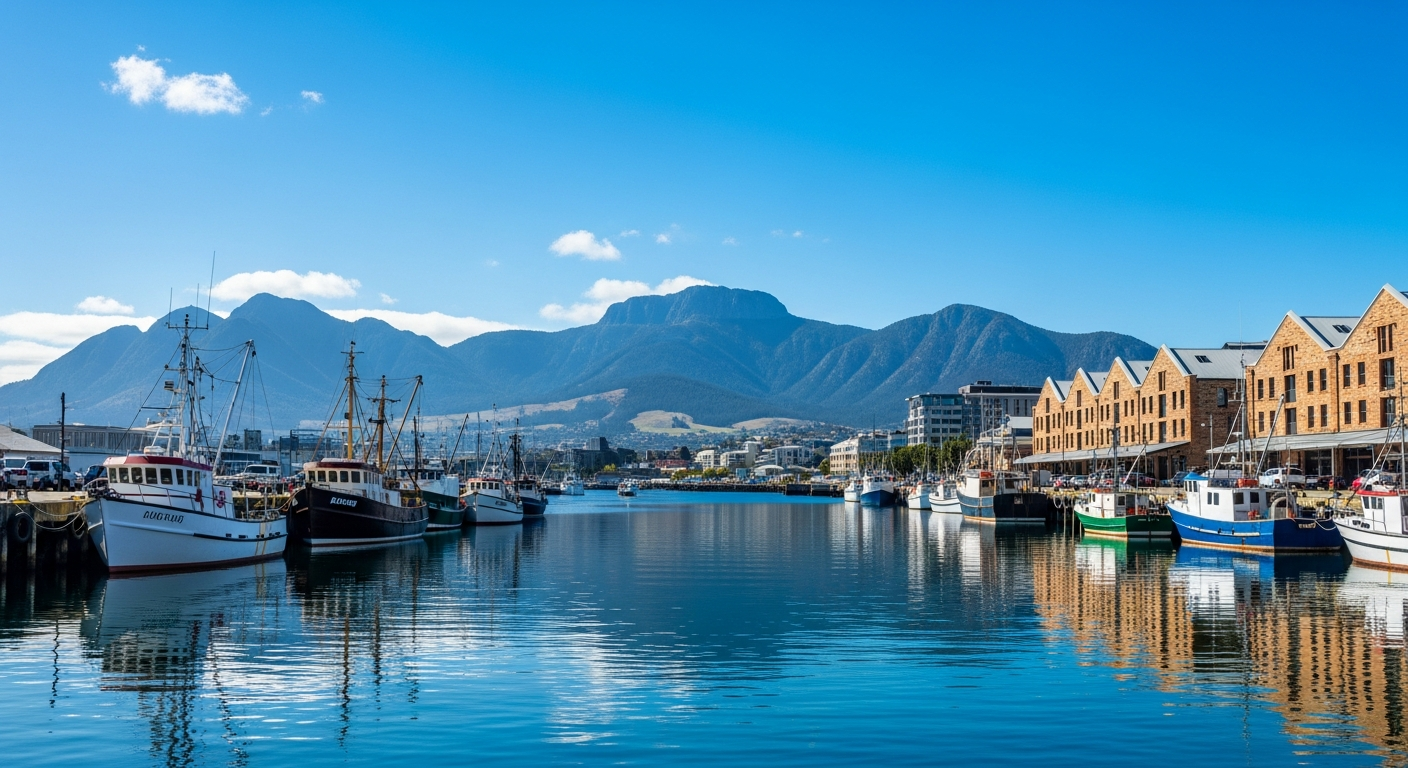
Hobart is Australia's second-oldest city and the capital of Tasmania, a compact waterfront city framed by the dramatic bulk of kunanyi/Mount Wellington. It has reinvented itself over the past two decades as one of Australia's most exciting destinations - driven by the extraordinary MONA museum, a world-class food and drink scene, the famous Salamanca Market, and a growing reputation as the gateway to Tasmania's wild landscapes. Hobart manages to combine colonial heritage, cutting-edge culture, and genuine character in a way few Australian cities can match.
Getting There
Hobart Airport is about 20 minutes east of the city centre. Jetstar, Virgin Australia, and Qantas operate direct flights from Melbourne (1 hour 15 minutes), Sydney (1 hour 45 minutes), and Brisbane (2 hours 30 minutes). The Spirit of Tasmania ferry sails overnight from Melbourne (Port Melbourne) to Devonport on Tasmania's north coast - from there, Hobart is about a 3.5-hour drive south via the Midland Highway. Airport shuttles, taxis, and rental cars are available at the airport.
MONA (Museum of Old and New Art)
MONA is the reason many people visit Hobart, and it lives up to the hype. Built into the sandstone cliffs on the Berriedale peninsula, 12km north of the city centre, MONA is the vision of professional gambler David Walsh. The museum houses a provocative, confronting, and deeply engaging collection of ancient antiquities and contemporary art. The building itself - a subterranean labyrinth carved into rock - is as much a work of art as anything inside it.
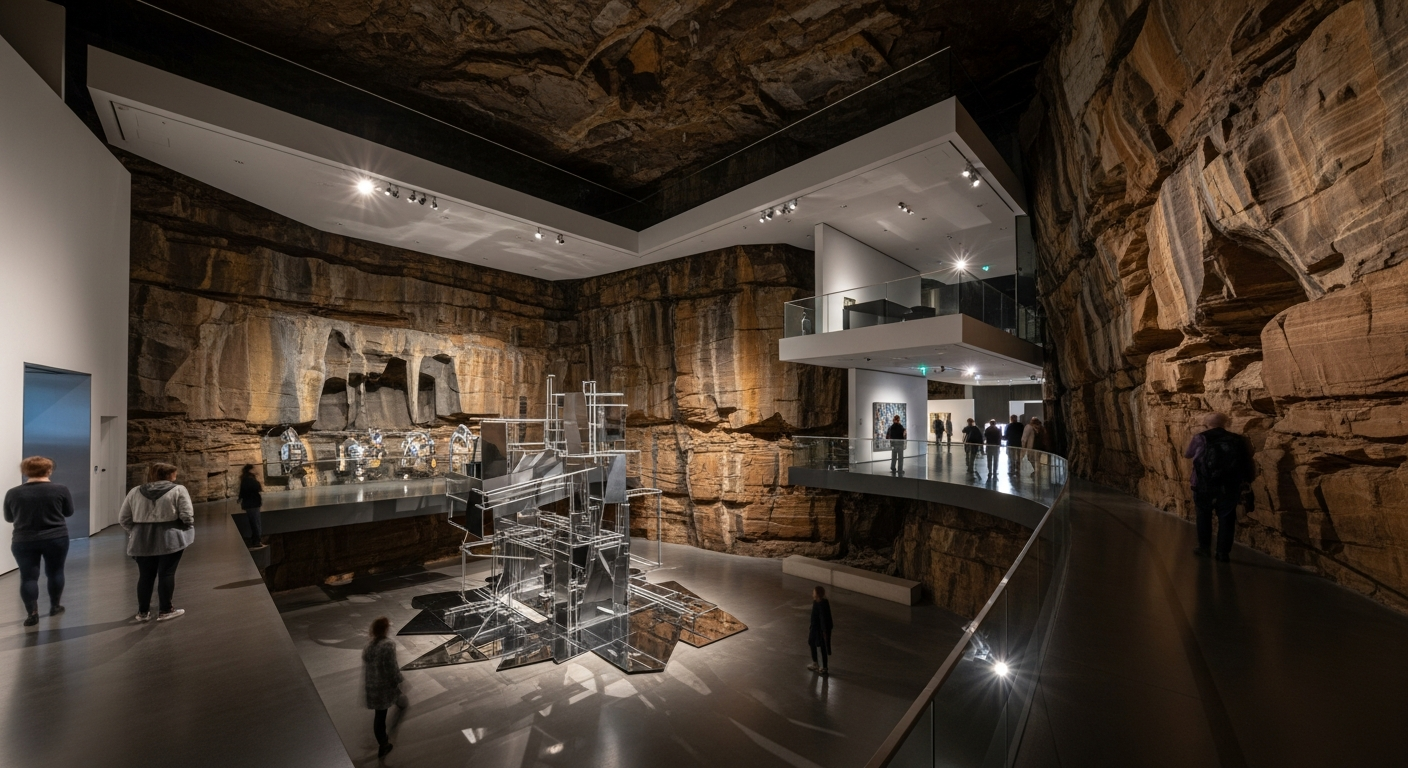
Getting there is part of the experience. The MONA ferry (the Mona Roma) departs from Brooke Street Pier in the city and takes 25 minutes, with a bar on board. Entry is $38 for adults (Tasmanians enter free). Allow at least 3-4 hours. MONA also hosts the Dark Mofo festival (June) - a winter arts festival of light installations, music, and feasting that has become one of Australia's most talked-about cultural events.
Salamanca Place & Market
Salamanca Place is Hobart's most iconic precinct - a row of beautifully restored 1830s sandstone warehouses now housing galleries, cafes, restaurants, and boutique shops. On Saturday mornings, Salamanca Market transforms the precinct into one of Australia's best outdoor markets, with over 300 stalls selling fresh produce, artisan crafts, Tasmanian cheeses, woodwork, jewellery, and street food.
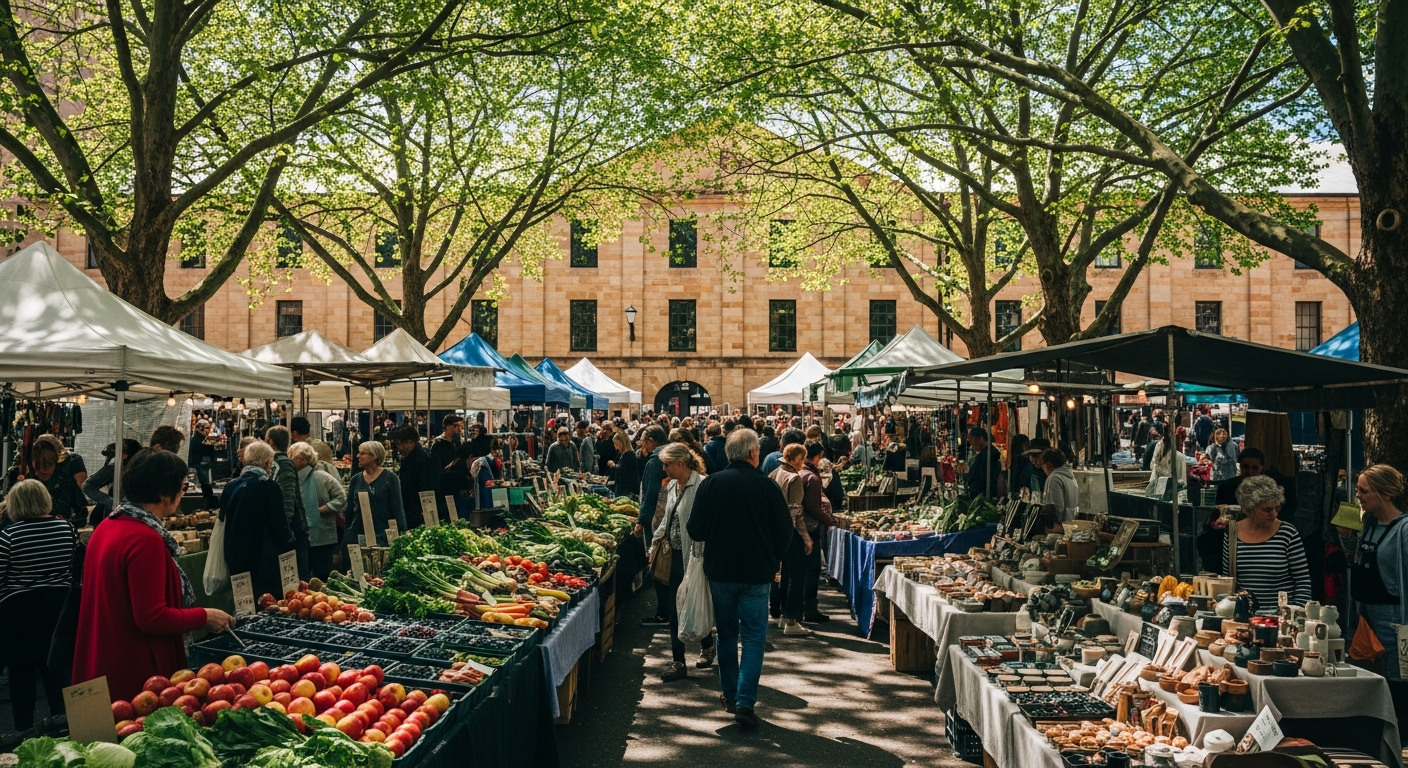
The market runs every Saturday from 8:30am to 3pm (weather permitting). Arrive early for the best selection and fewer crowds. The surrounding warehouses are worth exploring any day of the week - Salamanca Arts Centre hosts galleries and studios in the old buildings.
kunanyi/Mount Wellington
The mountain that looms over Hobart, kunanyi/Mount Wellington rises 1,271 metres above sea level and offers one of Australia's most spectacular city views from the summit. On a clear day, you can see the Tasman Peninsula, Bruny Island, and across to the southwest wilderness. The summit can be reached by car (about 20 minutes from the city centre) or by numerous walking and mountain biking trails.
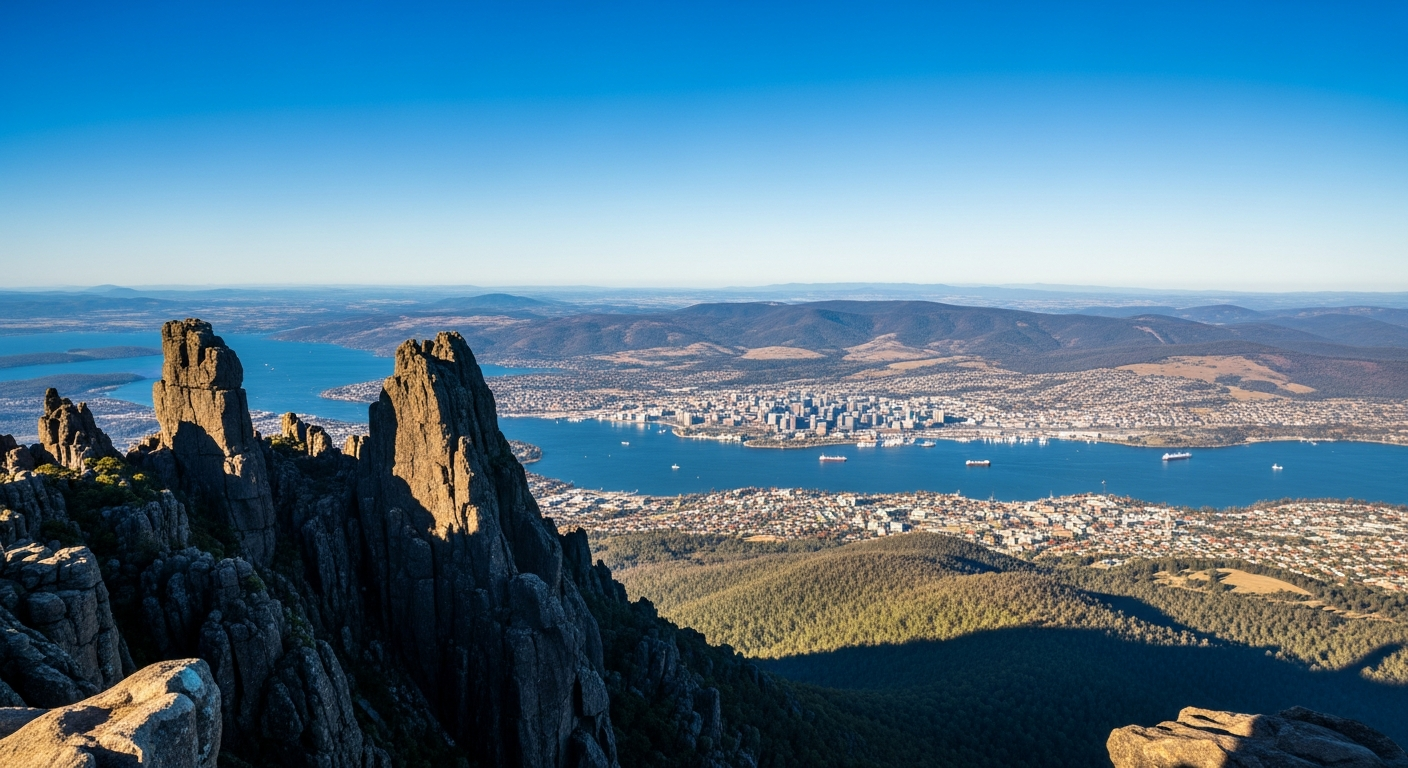
The Pinnacle is often significantly colder and windier than the city - bring warm layers even in summer. Snow can fall on the summit in any month. The Organ Pipes - dramatic dolerite columns on the mountain's eastern face - are visible from the city and impressive up close from walking tracks.
Battery Point
Hobart's oldest residential neighbourhood, Battery Point is a charming village of colonial cottages, narrow streets, corner pubs, and heritage gardens perched above Salamanca Place. The area gets its name from a gun battery that once protected the harbour. Wander through Arthur Circus (a beautiful Georgian circle of cottages), Kelly Steps (connecting Salamanca to Battery Point), and stop at the Shipwright's Arms or Jackman & McRoss bakery.
Hobart Waterfront
The waterfront stretches from Salamanca Place along Constitution Dock and Victoria Dock - home to fishing boats, floating fish-and-chip punts (Flippers and the Fish Frenzy barge are local favourites), and the finish line of the Sydney to Hobart Yacht Race each December. Brooke Street Pier is the modern ferry terminal for MONA, Bruny Island, and harbour cruises.
Where to Eat
Hobart's food scene punches well above its weight, driven by extraordinary Tasmanian produce - wild seafood, grass-fed beef, artisan cheeses, cool-climate wines, and some of Australia's best whisky.
- Templo: Hobart's best restaurant. An intimate, 20-seat space serving a multi-course degustation menu that showcases Tasmanian produce with incredible creativity. From $175. Booking essential.
- Fico: Excellent Italian-Tasmanian cuisine in a warm North Hobart setting. House-made pasta and Tasmanian seafood. Mains $28-42.
- Dier Makr: A tiny, reservation-only restaurant from the Templo team. Degustation only. From $160.
- Flippers: Floating fish-and-chip punt at Constitution Dock. Fresh-off-the-boat seafood. Fish and chips from $16.
- Pigeon Hole: Popular North Hobart cafe with excellent brunch and coffee. Mains $16-24.
- Born in Brunswick: Creative brunch cafe with bold flavours and exceptional coffee. Mains $18-26.
- Frank Restaurant: South American-inspired small plates and cocktails at Salamanca. Plates $14-28.
Where to Stay
- Budget: Montacute Boutique Bunkhouse (stylish hostel in a heritage building), The Nook (compact rooms in the city centre), Hobart Central YHA.
- Mid-Range: The Henry Jones Art Hotel (Australia's first dedicated art hotel, set in a stunning heritage jam factory on the waterfront. From $220), Salamanca Wharf Hotel (modern apartments with harbour views), MACq 01 Hotel (storytelling-themed hotel on the waterfront).
- Luxury: The Tasman (Marriott Luxury Collection in a beautifully restored heritage building), Moss Hotel (design-focused hotel in Salamanca), Islington Hotel (a grand Regency-era mansion with just 11 rooms and a stunning conservatory).
Practical Tips
- Weather: Hobart has a temperate maritime climate. Summer (December-February) averages 17-23°C with long daylight hours. Winter (June-August) is cold (3-11°C) with short days, but Dark Mofo and cosy pubs make it worthwhile. Hobart can experience four seasons in one day - layers are essential. - Getting around: The city centre is very walkable. Metro Tasmania runs buses to the suburbs. A car is useful for kunanyi and day trips. Parking in the CBD can be tight. - Day trips: Hobart is the perfect base for day trips to Bruny Island (1.5 hours + ferry), Richmond (30 minutes), Port Arthur (1.5 hours), the Huon Valley (45 minutes), and the Coal River Valley wine region (20 minutes). - Events: Dark Mofo (June), Taste of Tasmania (December-January), Sydney to Hobart Yacht Race finish (December 28-29), Festival of Voices (July).
AUBIS Tip
: Hobart deserves at least three full days. Use AUBIS to plan your visit - book the MONA ferry, schedule Salamanca Market on Saturday morning, add a kunanyi summit trip, and arrange dinner reservations at Templo or Fico. Combine with day trips to Bruny Island and Port Arthur. The platform will help you make the most of this compact but incredibly rich city.