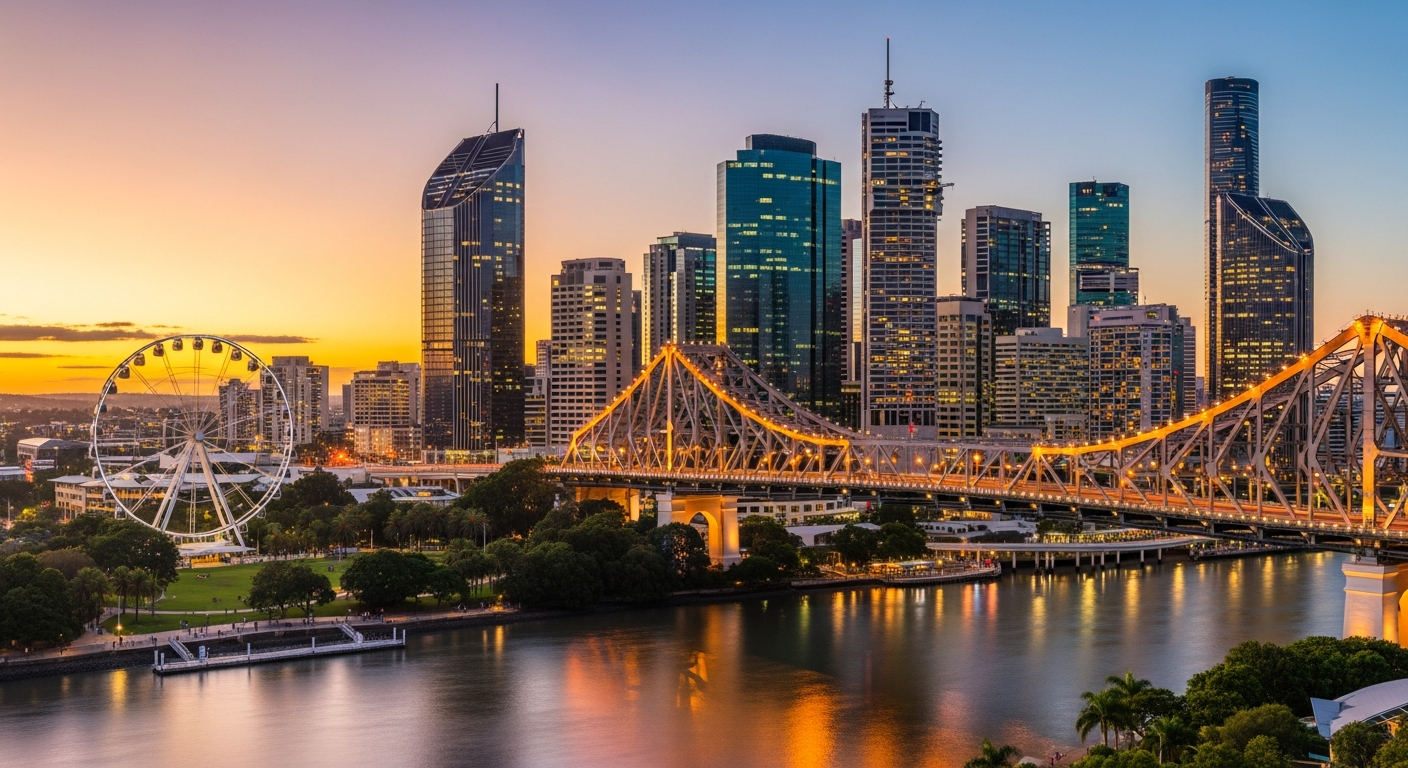
Brisbane has quietly transformed itself from a sleepy river city into one of Australia's most exciting destinations. With the 2032 Olympics on the horizon, there's never been a better time to visit Queensland's capital. But here's the secret the locals know: Brisbane has always been brilliant. You just need to know where to look.
Getting Around: 50-Cent Public Transport
Here's something that shocks most visitors: all public transport in South East Queensland currently costs just 50 cents per trip. Buses, trains, ferries, trams, all just 50 cents. Tap on with a credit card, debit card, or smart device and you're away. This covers the entire TransLink network across Brisbane, Gold Coast, and Sunshine Coast, making it one of the best-value transit systems in the world right now. The free CityHopper ferry runs up and down the Brisbane River between North Quay and Sydney Street, stopping at South Bank, the Maritime Museum, and Thornton Street, a scenic ride that costs absolutely nothing.
South Bank Parklands
South Bank is the beating heart of Brisbane and it's completely free to enjoy. This 17-hectare riverside precinct was built on the site of Expo 88 and features lush tropical gardens, winding boardwalks, and the famous Streets Beach, Australia's only inner-city man-made beach. Swim in a lagoon surrounded by white sand and tropical plants, with the city skyline as your backdrop. It's open year-round, there are lifeguards on duty, and it won't cost you a cent. The Arbour, a kilometre-long walkway draped in magenta bougainvillea, connects the parklands and is one of Brisbane's most photographed spots. On weekends, the South Bank markets come alive with handmade crafts, street food, and live music.
Free World-Class Art & Culture
Brisbane punches well above its weight when it comes to free cultural attractions, and they're all clustered together at the Cultural Precinct in South Bank.
- QAGOMA (Queensland Art Gallery & Gallery of Modern Art): Two spectacular galleries side by side. GOMA is the largest gallery of modern and contemporary art in Australia. Their permanent collections are free, and they regularly host blockbuster exhibitions (some ticketed). The Australian Cinémathèque inside GOMA screens art-house films. Don't miss the Children's Art Centre, which is genuinely world-class and completely free.
- Queensland Museum & Sciencentre: Explore Queensland's natural history, from dinosaur fossils to the state's unique wildlife. The museum is free (Sciencentre has a small fee). Their Spark Lab for kids is brilliant.
- State Library of Queensland: More than just books. The SLQ has free exhibitions, a beautiful rooftop terrace, free Wi-Fi, and the John Oxley Library for history buffs. The building itself is architecturally stunning.
- QPAC (Queensland Performing Arts Centre): While shows require tickets, QPAC regularly hosts free performances in their outdoor spaces, especially during festivals.
City Botanic Gardens
Brisbane's oldest park sits right on the river bend, a peaceful 20-hectare oasis at the edge of the CBD. Established in 1855, the gardens feature enormous Moreton Bay fig trees, bamboo groves, ornamental ponds, and a mangrove boardwalk. Entry is free, and it's a perfect spot for a morning walk or a picnic. The gardens connect beautifully to the river walk, which you can follow all the way to New Farm.
Mt Coot-tha Lookout & Botanic Gardens
For the best panoramic view of Brisbane, head to Mt Coot-tha lookout. It's free and just 15 minutes from the CBD by bus (remember, 50 cents!). On a clear day you can see from the Glass House Mountains to Moreton Bay and the islands. The nearby Brisbane Botanic Gardens at Mt Coot-tha (not to be confused with the City Botanic Gardens) cover 52 hectares and include a Japanese Garden, a Tropical Dome, and a Planetarium. The gardens are free; planetarium shows have a small fee.
Neighbourhoods Worth Exploring
- Fortitude Valley: Brisbane's entertainment district with live music, rooftop bars, Chinatown Mall, vintage shopping on Winn Lane, and James Street's designer boutiques and restaurants. The Valley is best experienced on a Friday or Saturday night.
- West End: The bohemian heart of Brisbane. Multicultural restaurants, independent bookshops, weekend markets at Davies Park (Saturday mornings), and the best Vietnamese, Greek, and Ethiopian food in the city. Boundary Street is the main strip.
- New Farm: Leafy streets, gorgeous Queenslanders, and New Farm Park on the river with its jacaranda trees (stunning in October-November). The Powerhouse arts centre hosts comedy, theatre, and markets.
- Howard Smith Wharves: Brisbane's most impressive urban renewal. Heritage wharf buildings transformed into restaurants, craft breweries, and event spaces, sitting directly beneath the Story Bridge with the cliffs above. It's stunning at sunset. Free to visit and wander; you only pay for food and drinks.
- Paddington: Given Road and Latrobe Terrace lined with antique shops, cafes, and colourful Queenslander houses. Great for a Saturday morning browse.
Where to Eat: Budget-Friendly
- Bahn Mi Factory: (West End): Outstanding Vietnamese rolls for around $8-10. The locals queue for these.
- King Ahiram's: (West End): Incredible Lebanese street food including falafel wraps and shawarma plates, all under $15.
- Eat Street Northshore: (Hamilton): Weekend night market with 50+ food stalls from around the world. Entry is a few dollars, and most dishes are $10-18. It's a fantastic night out.
- South Bank markets: Saturday and Sunday, great for affordable street food while you explore.
- Fish Lane: (South Brisbane): Once a back alley, now a vibrant laneway with affordable eateries, murals, and a community vibe. Julius Pizzeria does excellent wood-fired pizza from $18.
Where to Eat: Mid-Range
- Stokehouse Q: (South Bank): River views, modern Australian menu. Mains $35-45 but the atmosphere is worth every cent. Try the Sunday long lunch.
- Hellenika: (Howard Smith Wharves): Greek-inspired dining with views of the Story Bridge. Shared plates $20-38.
- Happy Boy: (James Street, Valley): Modern Chinese with a fun vibe. Dumplings, roast duck, banquet menus from $55 per person.
- 1889 Enoteca: (Woolloongabba): Beloved Italian with handmade pasta and a great wine list. Mains $32-42.
- Billykart Kitchen: (Annerley): Outstanding brunch and lunch. Known for their corn fritters and souffle pancakes. Dishes $16-28.
Where to Eat: Fine Dining
- Agnes: (Fortitude Valley): Wood-fired cooking with incredible local produce. One of Australia's best restaurants. Expect $120-160 per person for the full experience.
- Arc Dining: (Howard Smith Wharves): Contemporary Australian tasting menus in a stunning heritage building on the river. Tasting menu from $150.
- Sono: (Portside): Japanese fine dining with a sushi bar and teppanyaki. Omakase from $120.
Best Coffee in Brisbane
Brisbane's coffee scene is seriously good. The city roasts its own beans and takes its flat whites very seriously.
- Fonzie Abbott: (James Street, Valley): Specialty roaster with a beautiful warehouse-style cafe.
- John Mills Himself: (CBD): Hidden gem in a basement on Charlotte Street. Outstanding single-origin espresso.
- Parallel Roasters: (Milton): Precision coffee in a minimalist space. Their filter coffee is exceptional.
- Blackstar Coffee Roasters: (West End): Great coffee and their lamingtons are famous.
- Reverends Fine Coffee: (multiple locations): Consistent, quality coffee across the city.
Lone Pine Koala Sanctuary
If there's one wildlife experience you do in Brisbane, make it Lone Pine. It's the world's oldest and largest koala sanctuary, home to over 100 koalas along with kangaroos, wombats, platypuses, and native birds. You can hand-feed kangaroos and hold a koala for a photo (one of the few places in Australia where this is still allowed). It's about 12 kilometres from the CBD. Catch the 430 bus from the city (50 cents!) or take the scenic route on the Mirimar river cruise from South Bank. Entry is around $46 for adults and it's worth every cent.
Story Bridge Adventure Climb
For a different perspective on Brisbane, climb the Story Bridge, a guided climb to the top of Brisbane's most iconic bridge, 80 metres above the river. You'll get 360-degree views of the city, mountains, and Moreton Bay. It's similar to the Sydney Harbour Bridge Climb but less crowded and more affordable. Climbs run at dawn, day, twilight, and night. The twilight climb is particularly stunning as the city lights come on below you.
Roma Street Parkland
Another free green space in the heart of the city, Roma Street Parkland is the world's largest subtropical garden in a city centre. It's 16 hectares of manicured gardens, rainforest walks, water features, and open lawns. There's a free guided tour every day at 10am, and the Spectacle Garden with its seasonal flower displays is a highlight. It connects to the top of the city via Albert Street, making it easy to combine with a CBD visit.
Queen Street Mall & Eagle Street
Brisbane's main shopping precinct runs through the heart of the CBD. Queen Street Mall is a pedestrian-only strip with major retailers, arcades (check out the heritage-listed Brisbane Arcade), and street performers. For waterfront dining, head to Eagle Street Pier on the river. It's being redeveloped as part of the Queen's Wharf precinct, which will transform this end of the CBD with new restaurants, hotels, and public spaces ahead of the 2032 Olympics.
Moreton Island Day Trip
If you have a spare day, catch the ferry to Moreton Island from the Port of Brisbane (about 75 minutes). This sand island, the third largest in the world, has crystal-clear water for snorkelling around the Tangalooma Wrecks (15 deliberately sunken ships now teeming with marine life), towering sand dunes for tobogganing, and wild dolphins that visit the shore at Tangalooma Resort each evening. You can do a day trip or stay overnight. It's one of Brisbane's best-kept secrets.
Practical Tips
- Weather: Brisbane is subtropical, warm and sunny most of the year. Summers (December-February) are hot and humid with afternoon thunderstorms. Winter (June-August) is perfect with clear skies, low 20s during the day, and occasionally cool nights. Pack sunscreen year-round. - Airport to CBD: Take the Airtrain, which connects directly to the city and Gold Coast stations. With the 50c fare, it's the cheapest airport transfer in Australia. - CityCat & CityHopper Ferries: The river is Brisbane's highway. CityCat ferries run from the University of Queensland all the way to Northshore Hamilton, and they're 50 cents. It's genuinely the best way to see the city. - Free Wi-Fi: Available across South Bank, Queen Street Mall, and many public spaces. - Bike sharing: Brisbane has a bike share scheme, and the city is increasingly bike-friendly with dedicated riverside paths running from the CBD all the way to the University of Queensland and beyond. - Safety: Brisbane is generally very safe. The CBD, South Bank, and inner suburbs are well-lit and busy at night. Standard city precautions apply in the Valley late on weekend nights. - When to visit: Any time of year works. Winter (June-August) has the best weather. September-November is warm and dry with fewer crowds. Avoid the December-January school holiday peak if you want quieter attractions.
Recommended Tours
We're currently adding curated Brisbane tours from our verified local operators. In the meantime, ask Dingo (our AI travel assistant) to search for Brisbane tours, or browse the Discover page to see what's available in South East Queensland.
AUBIS Tip
: Brisbane is an excellent base for day trips to the Gold Coast (1 hour south), Sunshine Coast (1 hour north), and Moreton Island (75-minute ferry). All reachable on the 50c transit system or a short drive. Use AUBIS to plan a multi-day South East Queensland itinerary and keep all your activities, costs, and bookings in one place.